

The Czech Agentic State :: An Architecture
June 8, 2026

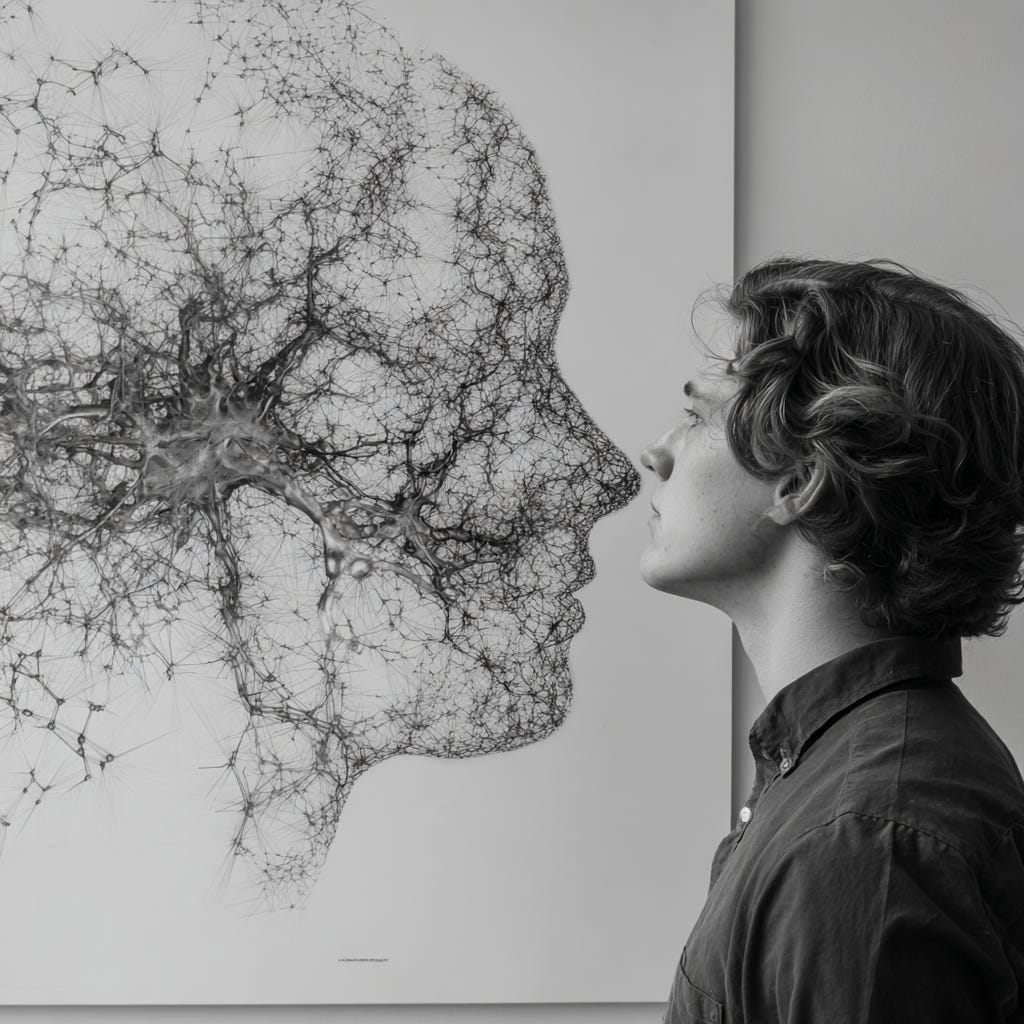
Phenomenology starts with a simple, disruptive claim: education is not primarily the transfer of information, but the transformation of experience. What matters is not only what students can repeat, but what they can see, what they can notice, what questions become available to them, and what kinds of actions feel possible. If a student leaves a lesson able to recite a definition yet unable to recognize the phenomenon in the world, the lesson did not truly land. Phenomenology gives us a language for diagnosing that gap.
From this view, many failures of modern schooling are not failures of curriculum, but failures of orientation. Students do not arrive as neutral receivers. Their attention is aimedâoften at survival inside an evaluative system: grades, speed, social status, avoiding embarrassment, minimizing risk. In such a stance, learning becomes performance. The classroom becomes a stage where the safest move is to guess the expected answer rather than to inquire. We then blame âmotivation,â when the deeper issue is that the system engineers the wrong intentionality.
Phenomenology also highlights what is missing from intellectual life in most classrooms: the disciplined pause that suspends assumptions. Epochéâbracketingâsounds abstract until you see what its absence produces: premature closure, shallow certainty, and brittle thinking. When education rewards quick answers, it teaches students to stop looking. Yet the real world, and especially the AI-saturated world, punishes people who confuse fluency for truth. If we cannot teach learners to hold uncertainty without panic and to test competing explanations, we are training them for manipulation.
A third diagnosis is the severing of knowledge from the lifeworld. Students encounter abstractions as floating symbolsâprocedures without consequence, facts without inquiry, writing without audience, science without contact with the phenomenon. Phenomenology insists that meaning is not a decorative layer added after the fact; it is the medium through which understanding becomes real. When concepts do not return to lived situationsâdecisions, constraints, measurable outcomesâstudents cannot own them. They might pass, but they do not possess capability.
Relatedly, phenomenology reframes what âunderstandingâ actually is: a change in how the subject matter appears. An expert is not simply someone with more stored information; an expert perceives structure. They see the key distinction, the hidden variable, the failure mode, the invariants across contexts. Most schooling measures outputsâworksheet completion, test scoresâwithout checking whether perception has reorganized. This is why students can succeed academically yet remain unable to think with what they learned.
Once you accept these diagnoses, the remedy stops looking like âmore contentâ and starts looking like redesigning the learning environment around interaction. Embodiment matters: students learn through perceptionâaction loops, through manipulating representations, building artifacts, running experiments, and receiving feedback. Being-in-the-world matters: meaning intensifies when tasks have stakes, audiences, and responsibilityâwhen learning is not âas-if,â but connected to real purposes. Situatedness matters: competence includes validity conditions, edge cases, and transfer across contexts, not just executing a template.
This is where dialogue becomes centralânot as classroom chatter, but as the core mechanism of collective sense-making. Dialogue forces claims to meet evidence, reveals assumptions, stabilizes standards, and makes revision socially safe. It is the antidote to reification, the process by which learning becomes dead tokens and compliance rituals. When the classroom becomes a community of inquiry, students are trained not merely to answer but to coordinate truth: to argue, test, refine, and build shared models of reality.
AI, in this frame, is not primarily an automation tool for producing assignments. Used naively, it accelerates the worst tendencies of modern schooling: fluent output without ownership, credential inflation, and deeper alienation. Used well, it becomes a tutor for attention, a generator of alternative hypotheses, a stress-tester of claims, and an experiment studio that lowers the cost of iteration. It can personalize contexts, produce counterexamples, track misconceptions over time, and facilitate group dialogueâwhile assessment shifts toward what AI cannot easily fake: live reasoning, experimentation, revision histories, and demonstrated agency.
The future of education, then, is not âAI in the classroomâ as a feature. It is a reorientation of schooling toward perception, inquiry, and responsible actionâsupported by AI but grounded in human dialogue and contact with reality. Phenomenology gives us a coherent theory of what must change: from performance to intentionality, from answers to bracketing, from abstraction to lifeworld, from recitation to transformed seeing. If we build education around these principles, we do not merely protect learning from AIâwe finally create the kind of learning that AI makes urgent.
Learners are never neutral: attention is always aimed at something (curiosity, fear, status, avoidance). Learning quality depends on the stance that governs attention.
School incentives often aim students at performance and threat-management (âget points, donât failâ), producing shallow cognition: memorization, compliance, minimal-risk answers.
Design stance-first lessons (puzzles, predictions, disagreements, real problems) and assess inquiry quality (questions, tests, revisions). Use AI as a Socratic coach and experiment designerânot an answer machine.
A disciplined pause that holds assumptions lightly so students can re-observe, compare hypotheses, and avoid premature certainty.
Education rewards fast closure and âone right answer,â training overconfidence and discouraging uncertaintyâfatal in a world of persuasive, AI-generated text.
Teach routines: assumptions â alternatives â falsifiers â minimal tests. Use AI to generate competing models, counterexamples, and test ideas, while requiring students to verify in reality.
Knowledge becomes real when concepts reconnect to lived contexts: decisions, situations, constraints, and consequencesânot just abstract symbols.
School often detaches learning from relevance, so students experience it as âfloating procedures,â which undermines motivation and transfer.
Start from concrete situations and return to them (apply, measure, build, decide). Use AI to personalize contexts, generate authentic tasks, and help students run small investigations.
Success is a shift in perception: students begin to notice structure, distinctions, and causalityâexpert âseeing,â not just correct recitation.
We measure outputs (tests, worksheets) more than transformations of perception, so students can âpassâ without truly seeing the domain.
Teach contrasts and ânear-misses,â and prioritize experiments/simulations that reveal structure. Use AI to spotlight patterns, generate edge cases, and guide micro-experiments.
Thinking is bodily and interactive: concepts stabilize through action, manipulation, feedback, and tool-use.
Too much learning is disembodied (sitting + symbols), producing brittle knowledge that doesnât transfer into performance.
Increase âperceiveâactâfeedbackâ loops (labs, studios, builds). Use AI to generate hands-on micro-experiments and coach iterative practice.
Learners are involved agents with goals, identity, and real concerns; meaning arises from care and practical engagement.
Many tasks are âas-ifâ and consequence-free, training passivity and alienation from learning.
Shift toward projects with real audiences and responsibility. Use AI for stakeholder role-play, risk analysis, and decision rehearsalâbut keep students as the agents.
Understanding includes knowing when an idea applies, under which constraints, and where it fails.
Students learn procedures tied to one format, so transfer collapses outside classroom templates.
Teach variation, edge cases, and validity conditions. Use AI to generate diverse contexts and adversarial counterexamples that stress-test claims.
Understanding develops through cyclesâconfusion, practice, revisiting, integrationânot instant capture.
Factory pacing and one-pass coverage produce cramming, forgetting, and shame around âslowâ learning.
Spiral concepts, require revision, and assess growth over time. Use AI for spaced retrieval, misconception tracking, and adaptive practice pacing.
A learnerâs horizon is their space of perceived possibilitiesâquestions they can imagine, methods they can choose, futures they can see.
School can shrink horizons into âone right way,â reducing curiosity, creativity, and initiative.
Teach framing, multiple lenses, and ânext questionâ thinking. Use AI to generate alternative frames and scenario treesâstudents must choose and justify.
Much competence starts as tacit pattern-sense before it becomes explicit explanation.
School over-rewards verbalization and under-trains judgment, estimation, and error-sensing.
Run âintuition â articulation â testâ loops (predict, explain, verify). Use AI to help label intuitions, propose checks, and generate counterexamples.
Texts, data, and claims are always interpreted through frames, goals, and assumptions.
Education treats meaning as obvious and trains students to guess âthe intended interpretation,â not evaluate competing readings.
Teach argument mapping and evidence standards; compare interpretations. Use AI to propose multiple readings and surface framing/biasâstudents defend with evidence.
Understanding forms through shared standards, dialogue, critique, and recognition in a community of inquiry.
School emphasizes isolated performance and status competition, weakening collaborative truth-seeking.
Structure dialogue (roles, norms, steelman) and build shared artifacts. Use AI to summarize debates, track disagreements, and suggest testsânever as final authority.
A disciplined ability to grasp how the world appears from another standpoint (values, constraints, evidence standards).
Students learn caricatured debate or compliance, making disagreement unproductive and polarizing.
Require steelmanning and âpredict their next argument.â Use AI for stakeholder simulations and to detect straw-manningâthen validate against real sources/people.
As skills develop, perception reorganizes: experts see structure and act fluidly; tools become extensions of capability.
Too much explanation, too few reps and feedback loopsâstudents never reach incorporation.
Deliberate practice with tight feedback and progressive difficulty. Use AI as an adaptive coach and drill generator, not a producer of final work.
Students relate to learning as a chosen, responsible pathânot as imposed compliance.
Grades and surveillance train âlearned non-ownershipâ: hiding confusion, outsourcing meaning, doing tasks for tokens.
Increase choice + responsibility + real outcomes. Use AI for planning, reflection, and personalized pathways, while requiring student voice and live defense.
When learning turns into grades, procedures, and credentials, the living purpose of understanding disappears.
Optimization for metrics drives shallow workâand AI can supercharge fake output.
Redesign assessment around whatâs hard to fake: live reasoning, experiments, portfolios with iteration logs, peer critique, and validity conditions. Use AI to amplify testing and critique, not to generate submissions.
Intentionality means: consciousness is always directed. You are never just âthinkingâ; you are thinking about something, from a stance: curiosity, fear, desire to pass, desire to impress, boredom, hunger for meaning, etc.
Phenomenology: learning is not âinput â storage,â but orientation â attention â meaning â integration.
A lot of schooling pretends students are neutral receptacles. But students are always oriented toward somethingâoften not the lesson:
âHow do I avoid embarrassment?â
âWhat do I need to say to get points?â
âHow do I look smart?â
âHow do I survive the next 45 minutes?â
âHow do I minimize effort?â
This is not moral failure. Itâs a predictable result of systems built around:
constant evaluation,
low agency,
external motivation,
compliance rhythms.
So the dominant intentionality becomes performance and threat management, not inquiry.
If intentionality is the engine of learning, teaching must become stance design:
shift from âcover topicâ â âevoke a stance toward the topicâ
shift from âexplainâ â âcreate a reason to lookâ
Practically, this means lessons should begin by engineering a lived question:
a puzzling phenomenon
a disagreement worth resolving
a prediction students can test
a tradeoff that forces thinking
a real artifact to critique or improve
The lessonâs first job is not âinformation.â The first job is orientation.
Dialogue is not just communication; it is attention steering.
A good dialogue:
makes students commit to a claim (âI predict Xâ)
exposes their implicit assumptions (âWhat are you assuming?â)
invites them to revise without shame (âWhat would change your mind?â)
makes thought visible (âSay your reasoning step by step.â)
Education is often monologic:
teacher speaks,
student fills blanks,
system grades output.
Phenomenology says: this misses how meaning actually forms. Meaning forms through directed attention + interpretive negotiationâwhich dialogue naturally provides.
Concrete dialogue protocols that align with intentionality:
âPrediction â Test â Explanationâ
âClaim â Evidence â Counterexampleâ
âExplain it to someone who disagreesâ
âSteelman the other view before respondingâ
AI can be used in two opposite ways:
Bad use (anti-phenomenological):
student asks AI for answer
copies
gets grade
no shift in perception or stance
Good use (phenomenological): AI becomes an orientation and dialogue amplifier:
Socratic partner: keeps asking for meaning, assumptions, examples
Opposing debater: forces the student to defend, clarify, refine
Tutor that tracks stance: notices avoidance, fear, confusion, overconfidence
Generator of experiments: offers testable predictions and quick simulations
Mirror of thought: reflects back the studentâs reasoning so they can inspect it
The key: AI should increase the density of attention and interaction, not decrease it.
A future curriculum isnât arranged primarily by topics, but by forms of orientation students must learn to inhabit.
Examples of intentionality-first goals:
curiosity stance: âI want to find out whatâs really going onâ
modeling stance: âI can build a representation and test itâ
critical stance: âI can separate claim from evidenceâ
design stance: âI can create and iterate artifactsâ
ethical stance: âI can see consequences and values at stakeâ
With AI, you can operationalize this by:
making every unit contain student-generated hypotheses
using AI to produce alternative hypotheses and counterexamples
requiring students to run micro-experiments (real world, simulation, data probes)
grading the quality of inquiry (questions, tests, revisions), not just final answers
Epoché is the disciplined act of suspending assumptionsâpausing automatic interpretationsâso you can see the phenomenon more clearly. Itâs not âdoubt everything,â itâs âhold your certainty lightly long enough to re-observe.â
Modern education often trains the opposite of epoché:
rush to the âright answerâ
punish uncertainty
reward fast recall
treat questioning as inefficiency
treat ambiguity as weakness
Students learn: âMy job is to be certain quickly.â
But real intelligence grows from:
delaying closure,
holding multiple hypotheses,
inspecting assumptions,
testing.
Epoché is the missing cognitive virtue.
Epoché should be explicit curriculum, not hidden.
Teach students micro-moves like:
âWhat am I assuming is true here?â
âWhat am I not seeing because of the frame?â
âWhat would be the strongest alternative explanation?â
âWhat would I observe if I didnât already âknowâ the answer?â
This is how you create thinkers who can:
handle novelty,
resist manipulation,
do science,
do strategy.
Epoché is hard alone; it becomes much easier in structured dialogue where other minds reveal your blind spots.
Dialogue protocols that train epoché:
Two-frame analysis: interpret the same event through two different lenses
Counterfactual dialogue: âAssume the opposite is trueâwhat follows?â
Assumption swap: each student must argue from the otherâs assumptions
Error-positive reflection: âWhere was I most confident and wrong?â
The classroom becomes a place where âI donât know yetâ is not failureâitâs the start of clarity.
AI is unusually strong at generating alternatives quickly. Used well, it becomes a bracketing machine:
list hidden assumptions in a studentâs explanation
generate competing hypotheses
provide counterexamples
propose tests that distinguish hypotheses
rephrase a claim in stricter terms (precision upgrade)
But thereâs a trap: AI can also produce âfalse closureâ by giving fluent answers that feel complete.
So you design AI use like this:
AI must always provide at least 2 competing models
students must choose a test that would separate them
students must report what evidence would change their mind
Thatâs epoché made operational.
In an AI-saturated world, the scarce skill is not information. Itâs:
epistemic humility,
model comparison,
test design,
resisting confident nonsense.
Epoché is the foundation of AI-era literacy:
âThis output is plausible; what assumptions does it embed?â
âWhat does it ignore?â
âWhat would falsify it?â
âWhat data do we need?â
Future education should grade students on:
quality of bracketing,
quality of alternative generation,
quality of tests,
ability to revise.
The lifeworld is the world as lived: concrete meaning, situations, purposes, familiar objects, social dynamicsâbefore abstraction. Itâs where learning becomes real.
Many students experience school knowledge as âfloating symbolsâ:
math as procedures without reality
science as facts without inquiry
writing as formats without stakes
history as dates without forces
This isnât because students âdonât care.â Itâs because the system often makes lifeworld irrelevant:
problems are artificial,
tasks have no consequence,
âwhyâ is missing,
mastery is defined as compliance.
Phenomenology predicts disengagement: if knowledge doesnât return to the lifeworld, it wonât become owned.
Instead of: concept â example
Use: lifeworld encounter â pattern â concept â return to lifeworld
This âreturnâ is crucial. Students must bring the abstraction back to:
interpret a real situation,
improve a decision,
build or debug something,
predict and test.
That is how abstraction earns its right to exist.
When dialogue is about artificial prompts, it becomes theatrical.
When dialogue is anchored in lifeworld situations, it becomes cognition.
Examples:
âWhy did this happen in our community / online / in this dataset?â
âWhich explanation fits the evidence?â
âWhat policy would you implement and why?â
âWhat design choice reduces failure?â
Lifeworld dialogue naturally creates:
disagreement,
stakes,
curiosity,
need for evidence.
Thatâs the real engine.
AI can finally solve a historic bottleneck: tailoring learning tasks to the learnerâs world without requiring a superhuman teacher.
AI can generate:
problems using the studentâs interests (sports, music, entrepreneurship, games)
local data explorations (public datasets, local issues)
simulations (simple models of markets, ecosystems, physics)
role-play stakeholders (citizen, engineer, policymaker, customer)
It can also support the teacher by:
turning lifeworld observations into structured inquiry tasks
generating differentiation (same concept, multiple contexts)
supporting reflection prompts that link concept â lived example
The key rule: AI shouldnât remove lifeworld; it should expand and intensify it.
The future is not âlearn facts.â Itâs:
build models that help you navigate reality,
run experiments,
coordinate with others,
create artifacts,
make decisions with evidence.
Lifeworld-centered AI education looks like:
weekly inquiry cycles
student projects tied to real systems
dialogue-based critique sessions
iterative experiments (physical, social, computational)
portfolios of artifacts (models, analyses, designs, explanations)
A phenomenon is not just âa thing,â but a thing as it appears to a learner. Education succeeds when the learnerâs world changes: they start seeing distinctions, structure, causality, constraints, possibilities.
Current systems often treat success as:
correct answers,
fluent recitation,
completed worksheets.
But phenomenology says the real question is:
How does this domain now appear to the learner?
Can they see what matters?
Can they perceive structure and error?
Can they generate good questions and tests?
A student can pass exams and still not see mathematics as structure or science as inquiry. Thatâs shallow education.
You can treat every subject as training perception.
Examples of âseeing movesâ:
in math: seeing invariants, constraints, symmetry, dimensionality
in writing: seeing argument structure, implications, ambiguity
in science: seeing variables, confounds, testability
in history: seeing forces, incentives, path dependence
in ethics: seeing stakeholders, tradeoffs, second-order effects
So lessons should repeatedly ask:
âWhat changed in how you see it?â
âWhat is the key distinction here?â
âWhat is the hidden structure?â
This is education as perceptual transformation.
Nothing reveals structure faster than a well-designed experiment:
you predict,
reality answers,
you update.
Even tiny experiments work:
micro-simulations
quick measurements
controlled variations
A/B tests in small artifacts
model comparisons using data
This is exactly what school underuses because itâs âmessy.â
But messiness is where phenomena reveal themselves.
AI can accelerate the transformation of appearing if used as:
structure spotlight: âHere are 3 patterns you might be missingâ
contrast generator: âHere are 5 examples and 5 near-missesâwhatâs the difference?â
error revealer: âHereâs where your reasoning breaks; hereâs a counterexampleâ
experiment designer: âHere are tests you can run; hereâs what each would showâ
simulation assistant: âLetâs quickly model the system and observe outcomesâ
The design principle is simple:
AI must increase the studentâs contact with the phenomenonâthrough contrasts, tests, and revisions.
If AI only increases fluent answers, appearing does not transform.
If you combine phenomenology with AI, the future classroom becomes:
Perception training: students learn to notice structure
Experimentation: students test and revise models
Dialogue: students negotiate meaning, defend claims, refine concepts
Artifacts: students build things that embody understanding
Portfolios: assessment becomes evidence of transformed capability
This is the opposite of the âworksheet-industrial complex.â
Embodiment (Merleau-Ponty): cognition is not a detached âmind.â Understanding lives in the lived bodyâperception, action, gesture, spatial intuition, rhythm, tool-use. We learn by doing, not only by describing.
Modern schooling often assumes:
if students can read/listen, they can understand
if they can repeat, they know
âreal learningâ = silent sitting + abstract symbols
This produces a common failure mode:
students can recite rules but cannot use them
they can say words but cannot navigate the phenomenon
Embodiment predicts why: without sensorimotor grounding, concepts stay âfloating.â
A concept becomes real when students repeatedly loop:
perceive â act â observe feedback â adjust
Examples across domains:
math: manipulating representations (graphs, diagrams, transformations), not only algebra
physics: feeling constraints (balance, friction, acceleration) through experiments
writing: speaking arguments aloud, hearing ambiguity, revising structure
programming: running code, observing behavior, debugging iteratively
This is not âplay for fun.â Itâs interactive contact with reality.
A lot of classroom talk is performative Q/A (âguess whatâs in my headâ). Embodied dialogue is different: it makes thinking visible and manipulable:
talk while drawing the model
gesture the causal structure (âthis pushes thatâ)
point to evidence in the artifact
slow down and narrate the move (âIâm changing this variable becauseâ¦â)
Embodied dialogue transforms âexplanationâ into shared perception.
AI can either worsen disembodiment (more screen, more passive answers) or become a âcoach of action.â
Good AI roles:
micro-experiment generator (quick tests using household items, simple sensors, web data)
interactive simulator (change variables, observe outcomes; student predicts first)
skill coach (for speaking, writing, coding, designâiterative feedback loops)
representation translator (turn verbal ideas into diagrams/checklists; then the student acts)
Design rule:
Every AI interaction should end with an action the student performs and verifies.
Embodiment implies the future model:
studio-based learning (make things)
lab-based learning (test things)
critique-based learning (discuss artifacts)
iteration as the normal rhythm
Assessment shifts from:
âcan you answerâ â âcan you perform, diagnose, improveâ
AI scales this by making iterative practice feasible for everyone, not only the top students.
Heidegger: humans are not spectators observing a world; we are already involvedâwe care, we cope, we use tools, we pursue goals, we face risks. Meaning is practical before it is theoretical.
Many school tasks are âas-ifâ tasks:
write an essay no one will read
solve a problem no one cares about
memorize facts without consequence
comply with procedures detached from agency
Students experience: âThis is not my world.â
Heidegger would say: education breaks because it ignores the studentâs mode of being: practical involvement, care, identity, reputation, fear, purpose.
Not dramaâreal stakes in an age-appropriate way:
students build something others rely on (a guide, a model, a tool, a briefing)
students advise a decision (policy memo, design choice, budget tradeoff)
students test claims that matter (local data, real controversies, measurable outcomes)
When learners are âin it,â attention becomes natural. You donât need motivational tricks.
Dialogue becomes real when students are defending or improving something they own:
âHere is our proposed solutionâattack it.â
âWhich risk did we miss?â
âWhat evidence would justify choosing Option A over B?â
âWhat happens if our model is wrong?â
This is dialogue as coordination for action, not talk for grades.
AI can powerfully support âbeing-in-the-world learningâ by helping students operate like real practitioners:
role-play stakeholders (customer, regulator, patient, voter)
simulate consequences and second-order effects
generate risk registers and mitigation options
help students prepare interviews, surveys, experiments
serve as âdevilâs advocateâ against their plan
But you must prevent AI from becoming the âdoer.â The student must remain the agent.
A good pattern:
student proposes â AI critiques â student revises â student tests in reality â student reports evidence
The AI era punishes passive competence. The scarce resource becomes:
making sense of messy situations
choosing what to do next
coordinating with others
evaluating claims and tools
âBeing-in-the-worldâ education trains students to navigate real complexity with judgment and responsibilityâexactly what pure content schooling fails to produce.
Meaning is situated: understanding depends on contextâgoals, constraints, tools, culture, framing. Knowledge is not a universal âthingâ you possess; it is a capability you can deploy in situations.
A classic failure: students do well in the classroom but cannot transfer.
Why? Because they learned:
procedures tied to one format (âthis worksheet typeâ)
definitions without usage conditions
answers without sensing relevance
Situatedness predicts transfer failure: knowledge wasnât learned as situational choice-making.
To learn a concept, students must see:
where it applies
where it doesnât
how it changes under constraints
Concrete practices:
ânear-missâ examples (almost fits, but fails)
changing constraints (time, resources, uncertainty)
multiple representations (text, diagram, equation, simulation)
scenario swaps (same concept in different domains)
This is how students build âwhen-to-useâ intelligence, not just âhow-to-doâ memory.
Situated dialogue sounds like:
âIn which context is your solution valid?â
âWhat constraint breaks your approach?â
âWhat hidden variable matters here?â
âWhat changes if we optimize for speed vs safety vs cost?â
This trains a major AI-era capability: conditional reasoning and tradeoff navigation.
AI is extremely useful for:
generating many contexts quickly
producing edge cases
offering counterexamples
stress-testing a studentâs claim
Powerful constraint:
Require students to state âvalidity conditionsâ for every explanation AI helps with.
AI prompt pattern:
âGive 5 contexts where this applies, 5 where it fails, and 5 tricky edge cases.â
Then the student must:
explain why each is in that bucket
propose a test for the edge case
In the AI era, anyone can get a plausible answer. The differentiator is:
knowing whether it applies here
what assumptions it relies on
what failure modes exist
how to adapt it to constraints
Situatedness becomes the backbone of:
AI literacy
decision-making
real-world problem solving
Understanding unfolds in time. Meaning is not captured instantly; it forms through cycles: exposure, confusion, practice, re-seeing, integration. There is also âkairosââthe right moment when something clicks.
School often moves as if:
everyone should learn at the same speed
understanding is immediate if explained clearly
curriculum coverage matters more than integration
Results:
shallow learning
anxiety and shame for âslowâ learners
forgetting after exams
no time for synthesis
Phenomenology says: you canât force lived understanding into industrial time.
Temporality implies:
you must return to ideas later, after new experiences
you must re-encounter concepts at higher resolution
Practical design:
short retrieval cycles (days)
application cycles (weeks)
synthesis cycles (months)
âcapstone re-seeingâ where old ideas are reinterpreted
Also: build explicit âintegration momentsâ:
âWhat changed in your view since last month?â
âWhat did you misunderstand earlierâand why?â
A strong method:
students commit to a model today
revisit the same model after experiments
compare early vs later thinking
This creates:
intellectual honesty
measurable growth
revision skill (the core of real intelligence)
Education should normalize:
âI was wrong, and here is how I updated.â
AI can be a continuous tutor that:
tracks misconceptions over weeks
schedules spaced practice
revisits earlier errors with new examples
prompts reflection at the right time
adapts pacing without stigma
But you must avoid the âinstant answer = instant masteryâ illusion.
So you structure AI use as:
delayed reveal (student predicts first)
forced retrieval (student explains without seeing notes)
iterative refinement (AI critiques, student revises)
spaced repetition (AI returns to the idea later)
Temporality implies the future isnât:
âeveryone completes Unit 7 by Fridayâ
but:
âeveryone reaches capability milestones, with different trajectoriesâ
With AI, you can finally do this at scale:
individualized learning paths
continuous formative feedback
portfolio evidence of growth
mastery by repeated integration, not one-time exposure
A horizon is the background of expectations, meanings, and possibilities that frames what a learner can even notice, ask, or imagine. Every experience comes with âmore than is currently givenâ: implicit context + anticipated futures.
Many students leave school with a shrinking sense of possibility:
âThereâs one right way.â
âMy job is to guess what the teacher wants.â
âBig questions are dangerous; small answers are safe.â
âIâm not that kind of person.â
Phenomenologically, this is catastrophic: if your horizon is narrow, you literally cannot see opportunities for inquiry, creativity, or agency.
Horizon expansion means enlarging:
what counts as a good question
what kinds of explanations are imaginable
what methods are available (experiment, modeling, dialogue, critique)
what futures a student can picture themselves inhabiting
Concrete moves:
âHere are 5 different ways professionals would approach this.â
âHere are 3 competing frames for the same situation.â
âHere are the next questions this opens.â
Good dialogue exposes students to âpossible worldsâ without forcing certainty:
âWhat else could be going on?â
âWhat would someone with a different goal see?â
âWhat are we not allowed to assume?â
âWhat becomes possible if this constraint disappears?â
A horizon expands when a student experiences:
their interpretation isnât the only one
ambiguity is workable
alternative futures can be reasoned about
AI can massively expand horizons by generating:
alternative hypotheses and frames
stakeholder viewpoints
scenario trees and second-order effects
ânext questionâ maps
analogies to distant domains
But the educational requirement is:
Students must choose and justify which horizon to operate in.
Good pattern:
AI proposes 6 frames â student selects 1 â student runs an experiment or builds an argument within that frame â student compares results with another frame later.
In an AI era, the limiting factor is not answers. Itâs:
selecting which questions matter
selecting frames that generate leverage
seeing option space
anticipating consequences
So the future curriculum should train:
framing skill
scenario thinking
âquestion-generation competenceâ
the ability to deliberately expand and then narrow horizons through tests
Pre-reflective experience is what you âknowâ before you can say it: tacit pattern sense, bodily skill, intuitive recognition. We often grasp something implicitly long before we can articulate it.
School privileges:
definitions
explanations
written output
explicit steps
But many real competencies grow as tacit perception first:
sensing a flawed argument before naming the flaw
feeling that a result is implausible
recognizing a pattern in data
hearing ambiguity in a sentence
When education ignores tacit knowing, students:
become brittle âexplainersâ without judgment
lose intuition instead of refining it
canât diagnose errors unless they match a known template
A powerful structure:
Intuition: âWhat do you sense is happening?â
Articulation: âName it. Whatâs the pattern?â
Verification: âHow would you test it? What evidence would decide?â
This preserves intuition while preventing it from becoming superstition.
Practical methods:
prediction before instruction
estimation practices (âballpark firstâ)
error-spotting drills
âwhich solution feels wrongâand why?â
Pre-reflective knowledge becomes educational when students can:
externalize it into language, diagrams, demonstrations
receive critique
compare intuitions with others
refine their âfelt senseâ into disciplined judgment
Dialogue prompts:
âPoint to where it breaks.â
âWhat detail triggered your suspicion?â
âCan you demonstrate it rather than explain it?â
âWhat would change your mind?â
AI can help students convert tacit sense into explicit, testable claims by:
asking for reasons behind a hunch
offering candidate labels (âIs it contradiction, equivocation, missing variable, base-rate neglect?â)
generating minimal tests
producing counterexamples to stress intuition
Design rule:
AI should never accept âI just feel itâ as final; it should help turn feelings into hypotheses.
When AI outputs fluent text, humans need:
the ability to sense when something is off
the ability to probe assumptions quickly
the ability to test rather than trust
So education should explicitly train:
calibrated intuition
anomaly detection
uncertainty awareness
fast experimental thinking (âwhat quick check would validate this?â)
Hermeneutics is the theory of interpretation: we never receive âpure factsâ without a frame. Meaning is always interpreted through prior assumptions, language, culture, and purpose.
Students are often trained to treat:
reading as decoding
listening as absorption
âcorrect interpretationâ as a single static thing
This breaks in real life, where:
arguments manipulate
data is framed
narratives compete
incentives distort meaning
Without interpretive skill, students become easy targets for misinformationâespecially amplified by AI.
Teach interpretation as disciplined practice:
identify the speakerâs goal
map the argument structure
separate claim vs evidence
find ambiguities and missing premises
compare alternative readings
test the reading against the whole context (partâwhole loop)
This is not âsubjective opinion.â Itâs a craft.
Interpretation improves when interpretations collide:
âShow me where the text implies that.â
âWhat would the author disagree with in your reading?â
âWhat alternative reading explains the same lines better?â
âWhich reading predicts what comes next?â
Classroom dialogue should shift from:
âWhat did the author mean?â (guessing)
to:
âWhat readings are possible, and which is best supported?â (reasoning)
AI can support interpretation by:
producing multiple plausible readings
mapping arguments into premises/conclusions
flagging loaded terms and rhetorical devices
generating âwhat would count as evidenceâ prompts
proposing questions to ask the author (simulated interview)
But again: the student must decide.
Use patterns like:
AI gives 3 interpretations â student defends 1 with textual evidence â AI attacks it â student revises.
In an AI media environment, everyone will be surrounded by:
persuasive synthetic narratives
plausible but distorted summaries
âevidence-lookingâ claims
Education must therefore train:
interpretive discipline
rhetorical and framing awareness
evidence standards
cross-checking habits
Hermeneutics becomes a survival skill.
Intersubjectivity is the shared world of meaning between persons. Understanding is not purely private; it is formed, stabilized, and corrected through social exchange, trust, recognition, and shared standards.
Typical schooling:
isolates students
penalizes collaboration
grades individual output
creates competition for status
This undercuts the real mechanics of learning:
we learn by explaining, arguing, imitating, correcting
we calibrate meaning socially
we build standards through community
When intersubjectivity is suppressed, students lose the most powerful correction mechanism: other minds.
A community of inquiry has:
shared norms: âclaims need reasons,â ârevision is respectedâ
distributed cognition: students build knowledge together
real roles: skeptic, explainer, tester, summarizer, connector
collective artifacts: shared models, living documents, experiment logs
Education improves when the âunitâ is not the isolated student but the thinking group.
Intersubjective dialogue should be structured, not chaotic:
rules for critique without humiliation
protocols for turn-taking and steelmanning
explicit evidence standards
âdisagreement mapsâ that track where people differ
This trains:
cooperative truth-seeking
epistemic humility
conflict navigation
leadership through clarity
AI can help groups by:
summarizing discussion and extracting claims
tracking disagreements and unresolved questions
generating tests to resolve disputes
ensuring quieter voices are surfaced (âWho hasnât spoken?â prompts)
providing neutral âjudgeâ functions (argument structure, missing premises)
But if AI becomes the authority, intersubjectivity collapses.
Design rule:
AI is a facilitator and mirror, never the final arbiter.
The future classroom can become a âhybrid intelligence labâ:
students collaborate with each other
AI facilitates, stress-tests, and personalizes practice
truth emerges from dialogue + experiment + evidence
This is exactly what modern education rarely achieves: a scalable culture of rigorous inquiry.
In phenomenology, empathy isnât âbeing nice.â Itâs the capacity to access another personâs experience as experienceâto grasp how the world appears from their standpoint (their fears, aims, constraints, meanings). Itâs how intersubjectivity becomes precise instead of vague.
School often treats perspectives as:
irrelevant (âjust learn the factsâ)
performative (âwrite what the teacher wantsâ)
moralized (âagree with the ârightâ viewâ)
Students donât learn how to reconstruct a worldview. They learn compliance or tribal argument. That destroys dialogue quality and makes disagreement unproductive.
Teach empathy as a disciplined procedure:
Reconstruction: âWhat is the other person trying to protect or achieve?â
Constraint mapping: âWhat constraints make their choice rational?â
Value inference: âWhat do they prioritize?â
Evidence standards: âWhat would they accept as proof?â
Prediction test: âIf I truly understand them, I can predict their next move/argument.â
Empathy becomes a cognitive tool for truth-seeking and coordination.
Add dialogue rules like:
steelman before critique
summarize their position to their satisfaction
separate values disagreements from facts disagreements
ask âWhat would change your mind?â genuinely
This transforms the classroom from debate theatre into collaborative inquiry.
AI can help by:
generating plausible stakeholder perspectives
role-playing an opponent who has coherent values
highlighting where a student caricatured the other side
suggesting clarifying questions that reduce conflict
But the student must still do real reconstruction.
Design rule:
AI can generate candidates, but students must validate them against real humans, texts, or evidence.
In an AI world:
social fragmentation rises
persuasion becomes cheap
misunderstandings scale fast
Empathy becomes infrastructure for:
collaboration
governance
negotiation
leadership
conflict de-escalation
Education should treat it as âapplied cognition,â not âsoft skills.â
Merleau-Pontyâs intentional arc: as skills develop, the whole field of perception and action reorganizes. Tools become extensions of the body. A novice sees noise; an expert sees structure and can act fluidly.
Students are often asked to talk about competence instead of becoming competent:
lots of âdefinitionsâ
few real reps
little feedback
weak iteration loops
So the intentional arc never forms. Students stay in brittle âstep-followingâ mode.
Skill incorporation requires:
high-quality repetitions
immediate feedback
progressive difficulty
attention to error patterns
reflection that extracts principles
This applies to:
reasoning
writing
math
coding
experimentation
collaboration
Key shift:
Curriculum should be organized around âcapabilities built by practice,â not âtopics covered.â
Dialogue that builds incorporation sounds like:
âShow your move.â
âWhere did it start to go wrong?â
âWhat cue did you miss?â
âWhat would you do first next time?â
This makes learning about improving perception-action coupling, not winning.
AI is excellent at:
generating practice sets tuned to weaknesses
giving immediate formative feedback
offering alternative strategies
tracking a studentâs error signature over time
replaying âsimilar but differentâ tasks for transfer
But: if AI supplies final products, incorporation dies.
Rule:
Use AI to create reps + critique, never to remove the learnerâs performance.
You can redesign schooling into mastery pathways:
students progress when capabilities stabilize
AI provides adaptive drills and feedback
teachers focus on motivation, meaning, group inquiry, and project design
assessment becomes performance evidence across time
This is the practical way to escape one-size-fits-all pacing.
Authenticity (Heidegger and later existential phenomenology) is not âbe yourselfâ as a slogan. Itâs owning your possibilitiesârelating to your learning and life as something you choose and take responsibility for, rather than something imposed.
Students learn:
perform for grades
hide confusion
mimic expected language
optimize for evaluation
outsource meaning to authority
This creates âlearned non-ownership.â
Students may succeed academically and still feel:
alienated
passive
incapable of initiating real projects
Authenticity emerges from structural conditions:
choice within constraints (real options)
responsibility for outcomes
visible impact (work matters to someone)
permission to revise identity (âIâm becoming capableâ)
environments where honesty about confusion is safe
Ownership grows when students must:
make claims
justify them
revise them publicly
choose methods
explain tradeoffs
Dialogue prompts:
âWhat do you believe and why?â
âWhat would you do next?â
âWhat did you choose not to doâand why?â
âWhat standard are you using to judge success?â
Thatâs agency training.
AI can support ownership by:
helping students set goals and plans
reflecting their progress back as a narrative
suggesting projects aligned with interests
offering multiple ways to approach the same capability
prompting metacognition (âWhat are you optimizing for?â)
But AI can also destroy authenticity by becoming the studentâs âvoice.â
So require:
voice constraints (student must speak in their own words)
provenance (what is yours vs assisted)
oral defense and live performance
portfolio evidence of iteration
Future education should create people who:
initiate
build
test
collaborate
revise
take responsibility
AI should free time from clerical work so students can do real work:
experiments
projects
investigations
designs
community contributions
Authenticity becomes a measurable outcome: âCan you author a path?â
Reification is when living meaning turns into dead objects. In education: learning becomes grades, procedures, tokens, complianceâwhile the real phenomenon (curiosity, understanding, capability) disappears. This is the phenomenology of âschool feels pointless.â
Common reifications:
learning = test score
intelligence = speed of recall
writing = formula
science = facts
school = credential factory
Students adapt rationally:
maximize grades
minimize risk
avoid deep confusion
outsource thinking when possible
This isnât laziness; itâs system incentives.
To restore meaning:
tasks must connect to real questions
work must produce artifacts with audiences
evaluation must reward thinking quality and revision
students must experience âknowledge as power to actâ
Core mechanism:
Replace token incentives with epistemic incentives: curiosity, prediction, testing, improvement.
Reification thrives in monologue and bureaucracy.
Dialogue restores:
living questions
active disagreement
shared standards
real-time correction
human recognition (âI see your mind workingâ)
But the dialogue must be about evidence and models, not status.
AI can intensify reification brutally:
students submit perfect-looking work with no ownership
teachers grade artifacts disconnected from student capability
credentials lose signal
learning collapses into âcontent generationâ
AI opportunity: de-reification via experiment and critique:
AI generates hypotheses, counterexamples, tests
students run experiments and defend conclusions live
assessment focuses on process evidence and performance
If you donât change assessment, AI will force reification.
The future needs:
oral defenses
live problem solving
project portfolios with iteration logs
peer critique records
experiment notebooks
âvalidity conditionsâ statements for claims
evaluation of questioning and testing skill
In short:
Grade what AI cannot fake easily: judgment, experimentation, dialogue, revision, and real agency.
June 8, 2026

June 5, 2026