




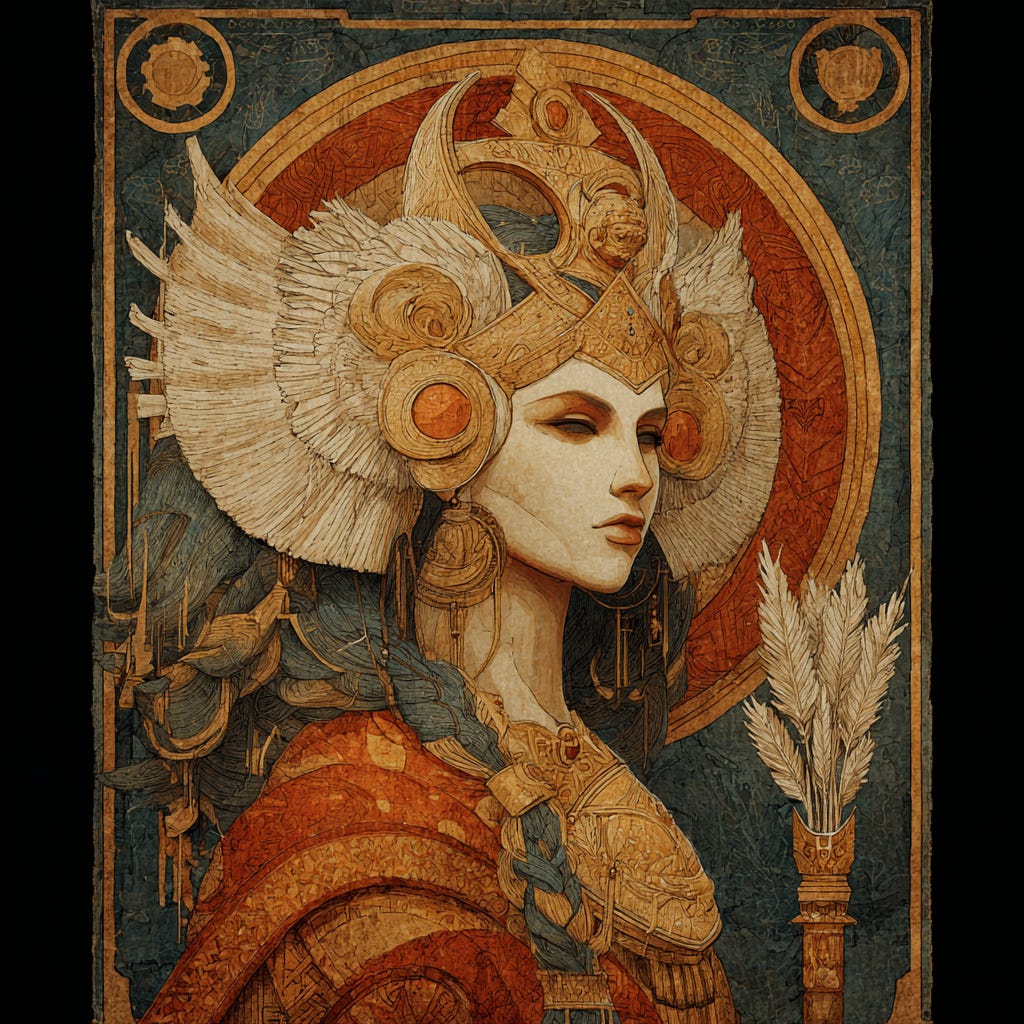
For most of modern history we have assumed that ancient civilizations were intellectually primitive. They lacked modern science, modern medicine, and modern technology. Their myths about gods and goddesses are often dismissed as naive attempts to explain the natural world. But this interpretation overlooks something far more interesting. Ancient cultures may not have understood physics the way we do today, yet they possessed an extraordinarily sophisticated understanding of human nature and the psychological forces required for societies to survive.
Mythology was not simply religion. It was a cultural technology. By encoding virtues and human capacities into the form of gods and goddesses, ancient societies created symbolic figures that people could aspire to embody. These figures represented fundamental human strengths—creativity, wisdom, courage, compassion, justice, and resilience. Rather than teaching these qualities through abstract rules, cultures embedded them in stories that were memorable, emotionally powerful, and socially reinforced.
This system solved an important problem that every civilization faces. Societies require individuals who excel in very different roles: creators, strategists, protectors, healers, leaders, explorers, and teachers. If a culture only celebrates one type of strength—such as dominance or wealth—it becomes unbalanced. Ancient mythologies instead constructed a diverse pantheon of archetypes, each representing a different dimension of human excellence.
These archetypes acted as psychological attractors. They told people not only how the universe works, but also how they themselves could become powerful and valuable members of society. The warrior could identify with Durga, the strategist with Athena, the scholar with Saraswati, the healer with Brigid, the protector with Artemis, and the steward of the land with Demeter. In this way mythology functioned as a civilizational guidance system, distributing honor across multiple forms of human capability.
When we examine mythologies across different cultures, a remarkable pattern emerges. Despite vast geographical distances, many societies developed similar archetypal figures. Civilizations independently recognized the importance of creativity, wisdom, justice, compassion, ecological balance, and renewal. These recurring themes suggest that ancient cultures were identifying universal principles necessary for the survival of complex societies.
The sixteen archetypes explored in this article represent a condensed map of these principles. Each figure—from Shakti and Athena to Gaia and the Great Mother—symbolizes a specific quality that civilizations must cultivate if they are to flourish across generations. Together they form a coherent framework describing the psychological architecture of a thriving society.
Modern civilization tends to rely heavily on institutions, regulations, and economic incentives to shape behavior. While these tools are powerful, they lack the emotional resonance of mythological systems. Ancient cultures understood that people are not motivated by rules alone. They are inspired by symbols, narratives, and ideals that give meaning to their actions.
Revisiting these archetypes therefore offers more than historical curiosity. It provides insight into how societies can cultivate balanced human development. By recognizing and celebrating diverse forms of strength—creative, intellectual, moral, and communal—we may rediscover part of the cultural wisdom that allowed ancient civilizations to organize human potential so effectively.
Summary
1. Creation — Shakti
Generative Energy
The foundation of any civilization is the ability to create.
The archetype of Shakti represents the fundamental creative force that generates life, ideas, culture, and innovation. In Hindu philosophy, Shakti is the energy that animates the universe itself.
Ancient cultures recognized that civilization grows when people generate new possibilities rather than merely maintaining what already exists.
Creation manifests through:
• intellectual discoveries
• artistic expression
• entrepreneurship and innovation
• community building
• raising new generations
Civilizations that honor creative individuals become centers of cultural and technological progress.
The lesson today is clear: societies must cultivate environments where creativity can flourish rather than be constrained by rigid structures.
2. Strategic Wisdom — Athena
Intelligent Organization
Creation alone is not enough. Civilizations must also organize their resources intelligently.
Athena represents strategic intelligence: the ability to analyze complex problems, plan for the future, and design systems that function effectively.
Ancient Greek culture admired thinkers who could combine rational analysis with practical decision-making.
This principle includes:
• systems thinking
• disciplined reasoning
• political strategy
• technological design
• long-term planning
Societies that cultivate strategic thinkers can navigate complexity and avoid catastrophic mistakes.
Athena reminds us that intelligence applied to governance and systems design determines the stability of civilizations.
3. Sustenance — Demeter
Stewardship of Life-Support Systems
Civilizations ultimately depend on their ability to sustain life.
Demeter, the goddess of agriculture, symbolizes the importance of nourishment, ecological awareness, and long-term stewardship of natural resources.
Ancient societies understood that survival depends on maintaining balance with the environment.
The Demeter principle emphasizes:
• respect for agricultural systems
• awareness of ecological cycles
• patience and long-term stewardship
• responsibility toward future generations
Civilizations collapse when they exploit natural systems faster than they regenerate.
Demeter reminds us that prosperity must be grounded in sustainable relationships with nature.
4. Compassion — Guanyin
Social Cohesion
Human societies require emotional intelligence in order to function.
Guanyin represents compassion — the ability to hear the suffering of others and respond with care.
Ancient cultures understood that cooperation cannot exist without empathy. Laws alone cannot sustain social harmony.
The compassion principle encourages:
• kindness and empathy
• care for vulnerable populations
• community support systems
• ethical leadership
Societies that cultivate compassion develop stronger social trust and cooperation.
Compassion acts as the glue that holds communities together.
5. Justice — Ma’at
Moral Order
Ma’at represents truth, justice, and balance.
In ancient Egypt, maintaining Ma’at was considered the central duty of rulers and citizens alike. Without justice, disorder spreads through society.
The principle emphasizes:
• honesty and integrity
• fair governance
• accountability in leadership
• alignment between actions and ethical values
When societies abandon justice, corruption and instability inevitably follow.
Ma’at teaches that civilization requires a moral foundation.
6. Connection — Aphrodite
The Power of Attraction
Civilizations are networks of relationships.
Aphrodite symbolizes beauty, attraction, and emotional connection — forces that draw people together and create social bonds.
These forces operate through:
• romantic relationships
• family structures
• artistic beauty
• cultural identity
• shared experiences
Beauty and emotional connection strengthen communities by giving people reasons to value their culture.
Aphrodite reminds us that societies endure when people feel emotionally connected to them.
7. Protection — Durga
Courage in Defense of Life
Durga represents the protective force that defends civilization against destructive threats.
Ancient cultures recognized that nurturing life sometimes requires strength and courage.
This principle emphasizes:
• bravery in the face of danger
• defense of the vulnerable
• disciplined use of power
• moral clarity during conflict
Without the capacity for protection, societies become vulnerable to internal and external threats.
Durga embodies the idea that compassion must sometimes be defended with strength.
8. Transformation — Kali
Renewal Through Change
Kali represents transformation — the destruction of outdated systems in order to create space for new growth.
Ancient cultures understood that civilizations must periodically renew themselves.
The transformation principle involves:
• confronting uncomfortable truths
• dismantling corrupt institutions
• adapting to changing conditions
• embracing innovation and reform
Civilizations that resist change become stagnant.
Kali reminds us that renewal often requires radical transformation.
9. Knowledge — Saraswati
Intellectual Illumination
Saraswati represents knowledge, learning, and intellectual expression.
Ancient Indian civilization placed extraordinary value on education and scholarship.
This principle celebrates:
• curiosity and lifelong learning
• mastery of language and communication
• transmission of knowledge across generations
• creativity in thought and expression
Societies that cultivate knowledge accumulate intellectual capital that drives innovation and cultural influence.
Saraswati represents the continuous flow of wisdom through civilization.
10. Leadership — Isis
Stewardship of the Future
Isis represents intelligent leadership devoted to preserving and protecting civilization.
Her mythology emphasizes resilience, wisdom, and responsibility toward future generations.
Leadership in this archetype means:
• guiding society through crises
• preserving institutions that sustain order
• acting with wisdom rather than ego
• prioritizing long-term stability
Strong civilizations depend on leaders who view power as stewardship rather than personal privilege.
11. Freedom — Artemis
Personal Sovereignty
Artemis represents independence, self-reliance, and the freedom to explore one’s own path.
Civilizations benefit from individuals who challenge conventions and explore new possibilities.
The Artemis principle values:
• intellectual freedom
• personal autonomy
• exploration and discovery
• courage to follow unconventional paths
Innovation often arises from individuals who operate outside established norms.
Artemis reminds us that civilization advances through independent thinkers and explorers.
12. Resilience — Persephone
Cycles of Renewal
The myth of Persephone reflects the cyclical nature of life: growth, loss, and regeneration.
Her story teaches that hardship is part of transformation.
The resilience principle encourages:
• patience during difficult periods
• psychological strength during adversity
• belief in eventual renewal
• learning from hardship
Civilizations inevitably face crises. Those that maintain resilience recover and evolve.
Persephone symbolizes the wisdom of moving through darkness toward renewal.
13. Ecological Awareness — Gaia
Living Within Planetary Systems
Gaia represents the Earth as a living system that sustains all life.
Ancient cultures often recognized that human survival depends on maintaining ecological balance.
The Gaia principle promotes:
• respect for natural ecosystems
• sustainable use of resources
• awareness of environmental limits
• humility toward planetary systems
Civilizations that ignore ecological constraints risk collapse.
Gaia reminds us that human prosperity depends on planetary health.
14. Healing — Brigid
Restoration and Cultural Renewal
Brigid symbolizes healing, creativity, and the restoration of balance.
Civilizations inevitably experience damage — physical, psychological, and cultural.
The healing principle includes:
• medicine and care for the sick
• storytelling and cultural memory
• craftsmanship and skilled work
• artistic inspiration
Societies that value healing and creativity recover more quickly from crises.
Brigid represents the ability of civilization to repair itself.
15. Harmony — Amaterasu
Cultural Light
Amaterasu, the sun goddess of Japan, symbolizes illumination, harmony, and the positive energy that sustains society.
Her myth demonstrates how darkness spreads when light disappears from the world.
This principle emphasizes:
• transparency and clarity
• cultural unity
• optimism and inspiration
• leadership that brings people together
Civilizations need shared sources of meaning that inspire hope.
Amaterasu represents the light that keeps society vibrant.
16. Interconnected Life — The Great Mother
The Total System of Civilization
The Great Mother archetype appears across cultures as the symbol of the entire life-support system that sustains humanity.
She represents the interconnected nature of:
• families
• communities
• nature
• culture
• future generations
Ancient societies understood that individuals exist within a larger network of relationships.
The Great Mother principle encourages responsibility toward the collective good.
It reminds us that civilization itself is a living system that must be nurtured and protected.
Principles
1. Creation
Archetype: Shakti — The Creative Energy of the Universe
The Myth
In Hindu philosophy, Shakti is not merely a goddess among others. She is the fundamental energy of existence itself.
The Hindu cosmology contains a profound metaphysical insight: consciousness alone is not enough to create reality. It requires energy to manifest.
In many traditions Shiva represents pure consciousness — the silent observer of the universe. But without Shakti, Shiva is inert. Only when Shakti moves does creation unfold.
In mythological imagery:
Shakti dances creation into existence.
She manifests the universe through infinite forms.
She appears in many embodiments — Durga, Kali, Parvati — each expressing a different dimension of cosmic energy.
The philosophical meaning is radical:
the universe is not static; it is a continuous act of creative unfolding.
Humans participate in this creative force.
What It Idealized
The archetype of Shakti idealized creative power as the highest form of strength.
Not domination.
Not conquest.
Creation.
The myth encoded the idea that the most powerful individuals are those who generate life, ideas, systems, and culture.
This archetype celebrates:
fertility and birth
artistic creation
intellectual innovation
cultural renewal
spiritual awakening
In psychological terms, Shakti represents generative energy — the ability to bring something new into existence.
Ancient cultures recognized that creation requires a specific set of human traits:
imagination
patience
nurturing
resilience
long-term thinking
Creation is slow. It requires sustaining fragile beginnings.
The Shakti archetype legitimized and celebrated these qualities.
How It Manifested in Real Life
In Indian civilization, reverence for Shakti translated into many real social structures.
For example:
• Education systems valued intellectual creation through philosophy and mathematics.
• Artistic traditions flourished — sculpture, temple architecture, poetry, music.
• Spiritual traditions emphasized inner transformation as a creative process.
• Women often held symbolic authority in religious practices representing divine energy.
• Festivals celebrating goddesses reinforced cultural respect for the creative principle.
Creation was not treated as a marginal activity.
It was seen as participation in the cosmic order.
A philosopher, a poet, a teacher, and a mother were all considered expressions of Shakti.
How It Made Civilization Stronger
Civilizations that celebrate creativity generate cultural evolution.
When a society honors creators:
knowledge expands
technologies emerge
art deepens identity
philosophy advances understanding
India historically produced enormous intellectual output:
early concepts of zero and advanced mathematics
deep metaphysical systems (Vedanta, Samkhya)
monumental architecture and art
sophisticated literature and poetry
These innovations were not accidental.
They emerged from a culture that believed creation was sacred.
When people see their work as cosmically meaningful, they produce extraordinary things.
What Modern Society Can Learn
Modern societies often celebrate efficiency and consumption more than creation.
But the future belongs to societies that restore reverence for creative power.
Lessons from the Shakti principle:
• Encourage creative exploration in education
• Respect intellectual and artistic work as civilizational contributions
• Recognize innovation as a cultural value
• Treat entrepreneurship as creation rather than mere profit
• Support environments where new ideas can emerge safely
The most powerful economies today are essentially creation engines.
Ancient cultures understood this thousands of years ago.
2. Strategic Wisdom
Archetype: Athena — The Intelligence of Civilization
The Myth
Athena is one of the most fascinating figures in Greek mythology.
Unlike most gods, she was not born in the usual way.
She emerged fully formed from the head of Zeus, armed with armor and wisdom.
This strange birth symbolized something important.
Athena represents intelligence that emerges from consciousness itself.
She is not impulsive like Ares, the god of war.
She is calm, analytical, and strategic.
Athena is the patron goddess of Athens — one of the most intellectually influential cities in human history.
Her domains include:
strategy in war
philosophy
crafts and engineering
political wisdom
She embodies the idea that civilizations thrive through intelligence, not brute force.
What It Idealized
Athena idealizes strategic thinking.
Ancient Greek culture deeply admired the ability to:
analyze complex situations
anticipate consequences
balance competing interests
design systems
Athena symbolized clear-minded decision-making under pressure.
Psychologically, the archetype represents the human capacity for:
• rational thought
• long-term planning
• strategic action
• disciplined learning
• mastery of craft
Athena is the archetype of the civilizational architect.
How It Manifested in Real Life
Athena’s influence shaped Greek culture profoundly.
Athens became a center of:
• philosophy (Socrates, Plato, Aristotle)
• political experimentation (early democracy)
• engineering and architecture
• military strategy
• public debate and rhetoric
Greek education emphasized:
logic
argumentation
philosophical inquiry
Citizens were expected to participate in civic decision-making.
Strategic intelligence became a cultural virtue.
How It Made Civilization Stronger
Athens produced one of the most influential intellectual traditions in human history.
Greek philosophy laid foundations for:
Western science
political theory
ethics
mathematics
logic
Athena’s archetype encouraged a culture where:
• ideas mattered
• debate was encouraged
• intellectual excellence was admired
The power of Greek civilization was not military dominance.
It was intellectual influence.
Greek ideas still shape modern institutions.
What Modern Society Can Learn
Modern societies often confuse intelligence with technical skill alone.
But Athena represents a deeper form of intelligence:
strategic wisdom.
Lessons from Athena:
• Teach systems thinking in education
• Encourage debate and philosophical inquiry
• Train leaders in strategic decision-making
• Value long-term thinking over short-term gains
• Reward intellectual rigor in public life
In an age of complexity, Athena’s archetype is more relevant than ever.
Civilizations today face problems requiring strategic intelligence on a global scale.
3. Fertility and Abundance
Archetype: Demeter — The Guardian of Sustenance
The Myth
Demeter governs agriculture and fertility.
Her myth centers on her daughter Persephone.
When Persephone is taken into the underworld, Demeter grieves. In her sorrow she stops allowing crops to grow.
The Earth becomes barren.
Eventually Persephone returns for part of each year, restoring life to the land.
This myth explains the seasons.
But more importantly, it expresses a profound truth:
human survival depends on the rhythms of nature.
What It Idealized
Demeter idealizes the principle of sustenance.
Civilizations cannot exist without stable food production.
The archetype celebrates:
patience with natural cycles
respect for the Earth
nourishment of communities
intergenerational responsibility
stewardship of land
Demeter reminds societies that survival depends on cooperation with nature.
How It Manifested in Real Life
Greek civilization built rituals around agricultural cycles.
Examples include:
• The Eleusinian Mysteries, sacred rituals honoring Demeter and Persephone
• seasonal festivals celebrating harvest
• communal agricultural practices
• reverence for fertile land
Farmers were respected members of society.
Agriculture was not seen as a low-status activity.
It was recognized as the foundation of civilization.
How It Made Civilization Stronger
Civilizations that understand ecological balance tend to survive longer.
Demeter’s mythology reinforced:
• agricultural knowledge
• community cooperation
• seasonal planning
• food security awareness
These cultural attitudes allowed societies to manage land sustainably.
What Modern Society Can Learn
Modern industrial society has partially forgotten the Demeter principle.
We often treat the Earth as an infinite resource.
But ecological crises remind us that civilizations still depend on:
soil health
climate stability
biodiversity
sustainable food systems
Lessons from Demeter:
• reconnect economies with ecological limits
• respect agriculture as strategic infrastructure
• protect natural systems
• build resilience in food supply chains
• cultivate long-term stewardship
The future will belong to civilizations that rediscover balance with nature.
4. Compassion
Archetype: Guanyin — The Listener of the World
The Myth
Guanyin is one of the most beloved figures in East Asian spiritual traditions.
She is known as the one who hears the cries of the world.
In myth, Guanyin vows not to enter enlightenment until all beings are freed from suffering.
Her compassion is limitless.
She listens, responds, and alleviates pain wherever it appears.
What It Idealized
Guanyin represents compassion as a form of wisdom.
Ancient Chinese philosophy recognized that societies cannot function purely through laws.
They require human empathy.
Compassion enables:
social harmony
mutual support
ethical leadership
peaceful cooperation
Guanyin symbolizes the ability to understand the suffering of others.
How It Manifested in Real Life
In Chinese and East Asian cultures, compassion influenced:
• community care structures
• charitable traditions
• ethical teachings in Buddhism and Confucianism
• cultural respect for kindness and humility
Leaders were expected to practice benevolence.
Confucian political philosophy emphasized moral character.
How It Made Civilization Stronger
Societies with strong compassion norms maintain social cohesion.
People trust each other.
Communities cooperate during crises.
Conflicts are resolved more peacefully.
Compassion acts as social glue.
What Modern Society Can Learn
Modern societies often prioritize competition over compassion.
But large-scale cooperation requires emotional intelligence.
Lessons from Guanyin:
• cultivate empathy in leadership
• strengthen community networks
• prioritize social well-being
• integrate emotional intelligence into education
• build institutions that reduce suffering
Compassion is not weakness.
It is the force that keeps societies from tearing themselves apart.
5. Justice and Cosmic Order
Archetype: Ma’at — The Principle of Truth and Balance
The Myth
In ancient Egyptian cosmology, Ma’at was not merely a goddess but the fundamental principle that holds the universe together.
Ma’at represented the equilibrium of reality: truth, justice, balance, and order. Egyptians believed the universe itself depended on maintaining this balance.
In the afterlife myth, the heart of a deceased person was weighed against the Feather of Ma’at. If the heart was heavier than the feather—burdened with lies, injustice, or wrongdoing—the soul could not enter the harmonious afterlife.
Even the gods were bound by Ma’at. Pharaohs did not rule by absolute authority but were expected to maintain Ma’at on Earth.
This myth encoded a radical idea for its time:
Power must serve order and justice, not itself.
What It Idealized
Ma’at idealized ethical alignment with reality.
In psychological terms, the archetype represents the human commitment to:
truthfulness
fairness
moral accountability
harmony within society
alignment between actions and principles
Unlike purely legal systems, Ma’at represented something deeper than law.
It symbolized cosmic integrity — the idea that when societies become dishonest or unjust, disorder inevitably spreads.
Ma’at therefore celebrated people who:
speak truth even when it is difficult
protect fairness in institutions
act responsibly toward the community
It made moral courage a sacred duty.
How It Manifested in Real Life
Egyptian civilization built many institutions around this principle.
Examples include:
• Pharaonic responsibility: rulers were expected to uphold justice rather than personal power.
• Legal systems emphasizing fairness: disputes were judged according to principles of balance rather than arbitrary authority.
• Administrative accountability: scribes and officials were trained to maintain accurate records and honest governance.
• Cultural teachings: moral instructions such as the “Instruction of Ptahhotep” encouraged humility, truthfulness, and ethical leadership.
• Symbolic rituals: ceremonies reaffirmed the restoration of Ma’at whenever disorder threatened society.
Ma’at was not simply religious symbolism.
It was the moral architecture of Egyptian civilization.
How It Made Civilization Stronger
Egypt remained stable for thousands of years partly because it institutionalized the idea that justice maintains order.
Societies that uphold fairness tend to have:
higher trust between citizens
more stable governance
lower internal conflict
stronger cooperation
When institutions align with Ma’at-like principles:
• corruption decreases
• institutions function more predictably
• leadership remains accountable
In many ways, Ma’at resembles the modern concept of rule of law.
But it also carried spiritual authority, making ethical behavior a civilizational obligation.
What Modern Society Can Learn
Modern societies often rely solely on legal enforcement to maintain order.
But Ma’at suggests something deeper:
justice must become a cultural value, not merely a legal requirement.
Lessons we can draw today:
• Build institutions that reward truth rather than manipulation
• Strengthen ethical education in leadership and governance
• Promote transparency in public systems
• Encourage citizens to value fairness and integrity
• Design systems that discourage corruption structurally
When truth erodes, societies destabilize quickly.
Ma’at reminds us that civilization rests on moral alignment with reality.
6. Love, Attraction, and Social Bonding
Archetype: Aphrodite — The Power That Draws People Together
The Myth
Aphrodite emerged from the sea foam in Greek mythology, symbolizing beauty born from the primordial forces of nature.
She is often remembered merely as the goddess of romance, but her mythological significance is far deeper.
Aphrodite represents the force of attraction itself.
This attraction operates on multiple levels:
romantic love
aesthetic beauty
creative inspiration
social connection
Even gods were influenced by Aphrodite’s power.
Her influence demonstrates that relationships shape the fate of civilizations.
What It Idealized
Aphrodite idealized the binding force of human connection.
Civilizations are not merely systems of laws or institutions.
They are networks of relationships.
Aphrodite celebrated qualities that strengthen these bonds:
emotional openness
appreciation of beauty
affection and intimacy
social harmony
admiration for excellence
Beauty in this context was not trivial.
It served a psychological function.
Beauty attracts attention and fosters emotional attachment to people, places, and ideas.
The Aphrodite archetype recognizes that humans build societies through connection.
How It Manifested in Real Life
Greek culture expressed Aphrodite’s influence through:
• artistic traditions emphasizing harmony and beauty
• celebration of love and marriage as social foundations
• appreciation of aesthetic excellence in architecture and sculpture
• public festivals honoring relationships and fertility
• poetry exploring emotional depth and human connection
Greek cities became centers of artistic beauty.
Architecture, sculpture, theater, and literature all reinforced a shared cultural identity.
Beauty was treated as a civilizational achievement.
How It Made Civilization Stronger
Cultures that value beauty and connection create stronger communities.
Beauty inspires pride and belonging.
Relationships create trust and cooperation.
Societies influenced by Aphrodite-like values often develop:
vibrant artistic cultures
strong family structures
emotional richness in social life
shared cultural identity
These qualities help civilizations endure difficult periods.
People fight to preserve cultures they love.
What Modern Society Can Learn
Modern societies sometimes dismiss beauty as superficial.
Yet environments rich in beauty and connection often produce:
higher psychological well-being
stronger communities
deeper cultural identity
Lessons from Aphrodite:
• design cities that prioritize beauty and human connection
• value art and aesthetics as civilizational assets
• encourage meaningful relationships in social life
• cultivate cultural traditions that bring people together
• recognize emotional well-being as part of societal health
Civilizations endure not just through power but through love for the culture itself.
7. Protection and Courage
Archetype: Durga — The Defender of Life
The Myth
Durga appears in Hindu mythology when the gods are unable to defeat a powerful demon threatening cosmic order.
The demon, Mahishasura, had become so powerful that no male god could defeat him.
In response, the gods combined their energies to create Durga — a warrior goddess embodying their collective strength.
Durga rides into battle with multiple arms, each carrying a weapon given by different gods.
She defeats the demon and restores balance to the universe.
The symbolism is clear:
the protection of life requires courage and decisive action.
What It Idealized
Durga represents protective strength guided by moral purpose.
She is not a conqueror.
She fights only when necessary to defend the world from destructive forces.
The archetype idealizes qualities such as:
bravery in the face of danger
responsibility to protect the vulnerable
disciplined use of power
moral clarity during conflict
resilience against chaos
Durga demonstrates that nurturing life sometimes requires forceful defense.
How It Manifested in Real Life
In Indian culture, Durga’s symbolism influenced:
• cultural admiration for courage and duty
• warrior traditions guided by ethical codes
• festivals celebrating the triumph of good over evil
• narratives emphasizing protection of community
The annual festival Durga Puja celebrates her victory over destructive forces.
The festival reinforces the idea that good must actively defend itself.
Protection becomes a sacred responsibility.
How It Made Civilization Stronger
Societies that cultivate courage can defend themselves against threats.
Durga’s archetype helped reinforce:
moral responsibility among warriors
community solidarity during crises
willingness to resist injustice
Civilizations without protective strength often collapse under external or internal pressure.
Durga represents the balance between compassion and strength.
Without protection, compassion cannot survive.
What Modern Society Can Learn
Modern societies often struggle to reconcile strength with morality.
Durga provides a model for ethical strength.
Lessons for today:
• build institutions capable of defending justice
• cultivate courage in leadership and citizens
• ensure power is used responsibly
• protect vulnerable populations
• maintain resilience against threats to social stability
Protection is not aggression.
It is the defense of life and order.
8. Transformation and Renewal
Archetype: Kali — The Power of Radical Change
The Myth
Kali is one of the most misunderstood figures in mythology.
She is often depicted as fierce: dark-skinned, wearing a necklace of skulls, standing over the body of Shiva.
But Kali represents a profound cosmic principle.
She is the force of transformation through destruction.
In myth, Kali appears when corruption becomes too powerful for gentle solutions.
She destroys demons that represent ego, illusion, and destructive forces.
Her terrifying appearance symbolizes a difficult truth:
renewal sometimes requires the destruction of what no longer serves life.
What It Idealized
Kali idealizes fearless transformation.
Psychologically, the archetype represents the human capacity to:
confront uncomfortable truths
dismantle corrupt systems
abandon outdated identities
embrace radical change
rebuild stronger structures
Kali celebrates individuals who have the courage to transform themselves and their societies.
How It Manifested in Real Life
Indian philosophical traditions embraced the idea that destruction is part of the cosmic cycle.
This influenced cultural attitudes toward:
• spiritual transformation through discipline
• acceptance of life’s impermanence
• willingness to challenge corrupt power structures
• recognition that renewal follows destruction
Rather than fearing change, many traditions saw transformation as a natural process of evolution.
How It Made Civilization Stronger
Civilizations that resist all change eventually stagnate.
Kali represents the capacity for self-renewal.
Societies influenced by this archetype maintain the ability to:
reform institutions
correct corruption
evolve cultural systems
adapt to new realities
Transformation prevents decline from becoming permanent.
What Modern Society Can Learn
Modern institutions often resist change even when transformation is necessary.
Kali reminds us that:
creative destruction is sometimes required for progress.
Lessons for today:
• challenge outdated systems that no longer serve society
• embrace innovation even when disruptive
• allow institutions to evolve rather than ossify
• encourage personal transformation and growth
• view crises as opportunities for renewal
Civilizations survive not because they avoid disruption.
They survive because they adapt through transformation.
9. Knowledge and Intellectual Illumination
Archetype: Saraswati — The Flow of Knowledge and Expression
The Myth
In Hindu tradition, Saraswati is the goddess of knowledge, learning, music, language, and intellectual clarity. She is often depicted seated on a white lotus, holding a book and a musical instrument called the veena.
Her name derives from a Sanskrit root meaning “that which flows.”
This is not accidental symbolism.
Knowledge in ancient Indian philosophy was not considered a static collection of facts. It was seen as a living current flowing through consciousness and culture.
Saraswati therefore represents:
the flow of ideas
the articulation of truth through language
the harmony between intellect and creativity
In many traditions she is invoked before learning begins. Students, teachers, musicians, and scholars all dedicate their efforts to Saraswati.
This myth expresses a powerful idea:
knowledge itself is sacred energy flowing through civilization.
What It Idealized
Saraswati idealizes the pursuit of understanding.
Unlike purely utilitarian views of education, Saraswati’s archetype celebrates knowledge as a fundamental human aspiration.
The qualities she represents include:
intellectual curiosity
disciplined learning
creative expression
mastery of language
the transmission of wisdom across generations
She also represents the ability to articulate complex ideas clearly, which is essential for civilization.
Without language and knowledge transfer, cultures cannot accumulate learning.
Saraswati therefore embodies civilizational memory and intellectual growth.
How It Manifested in Real Life
Indian civilization historically placed enormous emphasis on scholarship and education.
This influence can be seen in:
• the creation of ancient universities such as Nalanda and Takshashila
• extensive philosophical traditions (Vedanta, Yoga, Nyaya, Buddhism)
• advancements in mathematics including the concept of zero and positional number systems
• deep literary traditions such as the Vedas, Upanishads, and epic poetry
• strong oral traditions preserving knowledge across centuries
Education was treated not merely as preparation for employment but as a path toward wisdom.
Teachers were respected as guardians of cultural continuity.
How It Made Civilization Stronger
Societies that celebrate knowledge accumulate intellectual capital over time.
This accumulation produces:
scientific discoveries
philosophical insights
technological innovation
artistic achievements
Indian civilization’s intellectual traditions influenced mathematics, linguistics, and philosophy globally.
Knowledge became a renewable resource for cultural evolution.
By embedding learning within sacred symbolism, Saraswati ensured that education was valued deeply within society.
What Modern Society Can Learn
Modern education often prioritizes short-term utility over intellectual exploration.
The Saraswati principle reminds us that curiosity and scholarship are civilizational assets.
Lessons for today:
• cultivate curiosity-driven education
• respect teachers and researchers as cultural stewards
• support intellectual exploration beyond immediate economic outcomes
• strengthen the transmission of knowledge across generations
• integrate creativity with analytical learning
Civilizations that nurture knowledge become sources of innovation and cultural influence.
10. Leadership and Devotion to the Future
Archetype: Isis — The Archetype of Intelligent Leadership
The Myth
In Egyptian mythology, Isis is one of the most revered figures.
She is known for her intelligence, magical knowledge, and unwavering devotion to restoring life and protecting the future.
The central myth surrounding Isis involves the death of her husband Osiris, who is murdered and dismembered by his brother Seth.
Isis gathers the scattered pieces of Osiris, restores him through sacred knowledge, and protects their son Horus until he can reclaim his rightful place.
The myth illustrates several themes:
resilience in the face of catastrophe
the preservation of legitimate order
leadership guided by devotion to future generations
Isis is not merely a nurturing figure.
She is also a strategist, healer, and guardian of continuity.
What It Idealized
Isis represents intelligent leadership guided by responsibility.
Her archetype celebrates leaders who:
act with wisdom rather than ego
preserve institutions that sustain civilization
protect the vulnerable and the future
combine emotional intelligence with strategic thinking
Isis shows that leadership is not simply about authority.
It is about stewardship of civilization.
The leader’s role is to restore order when chaos threatens society.
How It Manifested in Real Life
Egyptian society incorporated these ideals into its leadership structures.
For example:
• rulers were expected to act as guardians of stability rather than mere conquerors
• queens and royal women sometimes played influential roles in governance
• religious traditions emphasized the ruler’s duty to preserve order and protect the population
• leadership legitimacy was tied to the ability to maintain Ma’at (cosmic balance)
Leadership was therefore understood as sacred responsibility rather than personal power.
How It Made Civilization Stronger
Egypt remained one of the most stable civilizations in history, lasting over three millennia.
Part of this stability came from cultural expectations surrounding leadership.
The Isis archetype reinforced:
long-term thinking among rulers
dedication to preserving social order
continuity across generations
By embedding leadership within moral and spiritual frameworks, Egyptian civilization created a sense of responsibility beyond individual ambition.
What Modern Society Can Learn
Modern leadership often suffers from short-term incentives and ego-driven competition.
The Isis principle suggests leadership should emphasize:
• stewardship of long-term societal well-being
• ethical responsibility toward future generations
• emotional intelligence and wisdom in governance
• preservation of institutions that sustain civilization
• resilience during crises
Leadership is strongest when it is guided by responsibility rather than dominance.
11. Freedom and Personal Sovereignty
Archetype: Artemis — The Spirit of Independence
The Myth
Artemis, the Greek goddess of the wilderness and the hunt, represents independence and autonomy.
Unlike many gods who participate heavily in social and romantic entanglements, Artemis chooses a different path.
She lives freely in the forests, accompanied by companions who share her commitment to independence.
Artemis is also a protector of women, children, and animals.
Her mythology emphasizes self-sufficiency and connection with the natural world.
She represents the idea that individuals must sometimes step outside social constraints to discover their true strength.
What It Idealized
Artemis idealizes personal sovereignty.
The archetype celebrates qualities such as:
independence of thought
courage to follow one’s own path
self-reliance
respect for nature
protection of individual dignity
Civilizations require not only conformity but also independent thinkers and explorers.
Artemis represents the archetype of those who:
question established norms
explore unknown territories
pursue personal mastery
She embodies the spirit of self-directed life.
How It Manifested in Real Life
Greek culture placed value on individual excellence and autonomy.
Examples include:
• respect for athletes and explorers
• philosophical traditions encouraging independent inquiry
• admiration for heroes who challenged conventional limits
• social structures allowing certain degrees of personal freedom
Greek culture celebrated individuals who pushed boundaries — in philosophy, exploration, and artistic expression.
How It Made Civilization Stronger
Civilizations benefit greatly from individuals who challenge existing limits.
Independent thinkers often generate:
scientific discoveries
philosophical breakthroughs
artistic innovations
exploration of new territories
The Artemis archetype encourages societies to tolerate — and even celebrate — nonconformity when it leads to excellence.
Without this archetype, civilizations risk becoming rigid and stagnant.
What Modern Society Can Learn
Modern societies often struggle to balance social stability with personal freedom.
Artemis reminds us that innovation requires independence.
Lessons for today:
• protect intellectual freedom
• encourage exploration and experimentation
• support individuals pursuing unconventional paths
• cultivate self-reliance and resilience
• maintain strong connections with the natural environment
Civilizations advance when individuals feel empowered to explore new possibilities.
12. Resilience and Cyclical Renewal
Archetype: Persephone — The Journey Through Darkness
The Myth
The story of Persephone explains the changing seasons.
Persephone, daughter of Demeter, is abducted by Hades and taken to the underworld.
Her mother’s grief causes the Earth to become barren.
Eventually a compromise is reached.
Persephone spends part of the year in the underworld and part of the year returning to the surface.
When she returns, the world becomes fertile again.
The myth expresses a profound truth:
life moves through cycles of growth, loss, and renewal.
What It Idealized
Persephone symbolizes resilience through transformation.
Her archetype celebrates the human capacity to:
endure difficult periods
learn from adversity
emerge stronger after hardship
integrate dark experiences into wisdom
Rather than portraying suffering as meaningless, the myth frames it as part of a larger cycle of renewal.
This perspective encourages psychological resilience.
How It Manifested in Real Life
Greek culture incorporated this myth into spiritual practices such as the Eleusinian Mysteries, secret rituals dedicated to Demeter and Persephone.
These rituals helped participants understand:
the cyclical nature of life
the inevitability of loss and renewal
the promise of regeneration after hardship
The teachings offered psychological comfort during times of grief and uncertainty.
How It Made Civilization Stronger
Civilizations inevitably experience crises.
Economic collapse, war, disease, and natural disasters are unavoidable.
The Persephone archetype helped societies endure these cycles.
It reinforced cultural attitudes such as:
patience during difficult periods
belief in eventual renewal
emotional resilience in the face of loss
These attitudes helped communities recover from hardship.
What Modern Society Can Learn
Modern culture often struggles with failure and adversity.
Persephone teaches that growth requires confronting darkness.
Lessons for today:
• cultivate resilience in education and leadership
• recognize the cyclical nature of economic and social systems
• support psychological recovery after crises
• view setbacks as opportunities for transformation
• maintain hope during difficult periods
Resilient societies do not avoid hardship.
They learn how to move through it and regenerate.
13. Ecological Intelligence and Planetary Grounding
Archetype: Gaia — The Living Earth
The Myth
In Greek cosmology, Gaia is not merely a goddess but the primordial Earth itself — the origin from which all life emerges.
Before the Olympian gods existed, Gaia was already present. She gave birth to the mountains, the seas, and the sky.
She represents something ancient cultures instinctively understood:
the Earth is not just a resource — it is the foundation of all life.
Many mythologies contain similar figures:
Pachamama in Andean cultures
Jord in Norse mythology
Mother Earth in numerous indigenous traditions
These archetypes all express the same insight:
human civilization exists inside a larger living system.
What It Idealized
The Gaia archetype idealized ecological awareness and respect for natural systems.
The qualities associated with this archetype include:
humility toward nature
awareness of environmental limits
responsibility for land stewardship
respect for natural cycles
gratitude for the Earth’s abundance
Ancient societies often lived closer to ecological realities.
Their myths reinforced the idea that harmony with the Earth determines survival.
How It Manifested in Real Life
In many ancient cultures this archetype influenced daily practices.
Examples include:
• agricultural rituals honoring the land before planting
• seasonal festivals aligned with natural cycles
• sacred groves and protected natural areas
• taboos against overexploiting resources
• spiritual traditions emphasizing connection to the Earth
Even when early civilizations altered landscapes, they often did so with awareness of long-term ecological consequences.
The Earth was treated not as property but as a living system deserving respect.
How It Made Civilization Stronger
Civilizations that maintained ecological awareness often sustained themselves longer.
The Gaia principle encouraged:
responsible land management
agricultural sustainability
preservation of biodiversity
awareness of environmental limits
When societies forgot this principle, ecological collapse often followed.
History contains many examples of civilizations that declined after overexploiting natural systems.
The Gaia archetype functioned as a cultural reminder that human survival depends on planetary balance.
What Modern Society Can Learn
Modern industrial civilization has unprecedented technological power, but it sometimes lacks ecological humility.
The Gaia principle offers several lessons:
• design economic systems aligned with ecological limits
• restore respect for natural systems in cultural values
• protect biodiversity and ecosystems
• incorporate environmental stewardship into governance
• recognize planetary stability as strategic infrastructure
The future of civilization depends on learning again how to live within Earth’s systems rather than above them.
14. Healing and Creative Renewal
Archetype: Brigid — The Flame of Healing and Inspiration
The Myth
In Celtic mythology, Brigid is a goddess associated with healing, poetry, craftsmanship, and fire.
She is often depicted as the keeper of sacred flames — symbols of inspiration and renewal.
Brigid represents the power to restore life after injury or exhaustion.
Her domains include:
medicine
artistic inspiration
skilled craftsmanship
spiritual renewal
In Celtic tradition, creativity and healing were closely connected.
Both involve transforming something broken into something whole again.
What It Idealized
The Brigid archetype idealized restoration and creative renewal.
Civilizations inevitably experience damage — physical, psychological, and cultural.
Brigid celebrates individuals who help repair and regenerate society.
The qualities associated with this archetype include:
compassion in healing
creativity in problem solving
skillful craftsmanship
dedication to restoring balance
inspiration that revitalizes culture
Healing is not merely medical.
It includes repairing communities, traditions, and identities.
How It Manifested in Real Life
Celtic societies valued individuals who embodied Brigid’s qualities.
Examples include:
• healers and herbalists preserving medicinal knowledge
• poets and storytellers transmitting cultural memory
• skilled artisans producing tools and art
• spiritual leaders guiding community renewal
The Celtic tradition of honoring bards and craftsmen reflected this archetype.
Creative expression was considered essential to cultural health.
How It Made Civilization Stronger
Societies that value healing and creativity recover more quickly from crises.
The Brigid archetype strengthened civilization by encouraging:
medical knowledge and care
cultural storytelling preserving identity
craftsmanship improving everyday life
artistic expression revitalizing collective spirit
These functions help communities maintain psychological and cultural resilience.
Healing allows societies to recover after hardship.
What Modern Society Can Learn
Modern societies often separate medicine, creativity, and craftsmanship into disconnected domains.
The Brigid principle suggests they are deeply connected.
Lessons for today:
• invest in both medical and psychological healing systems
• value artists and storytellers as cultural healers
• support craftsmanship and skilled trades
• integrate creativity into education and problem solving
• recognize cultural renewal as essential to societal health
Civilizations remain strong when they can heal themselves and renew their spirit.
15. Harmony and Illumination
Archetype: Amaterasu — The Light That Sustains Civilization
The Myth
In Japanese Shinto mythology, Amaterasu is the sun goddess and the source of light for the world.
One of her most famous myths describes how she retreats into a cave after being offended by her brother’s destructive behavior.
When she hides, the world is plunged into darkness.
The other gods attempt to lure her out through celebration and laughter.
Eventually she emerges, restoring light to the world.
This myth illustrates a deep civilizational insight:
light — both literal and symbolic — sustains social order and vitality.
What It Idealized
Amaterasu represents illumination, harmony, and the sustaining power of positive energy.
The archetype celebrates qualities such as:
clarity and transparency
warmth and generosity
joyful cultural expression
leadership that inspires unity
the ability to bring light into dark situations
Light in mythology often symbolizes awareness and moral clarity.
Amaterasu therefore represents the leadership and cultural energy that keep societies vibrant.
How It Manifested in Real Life
Japanese culture historically integrated this archetype into its national identity.
Examples include:
• the emperor traditionally regarded as a descendant of Amaterasu
• cultural emphasis on harmony and social balance
• festivals celebrating light, renewal, and seasonal cycles
• aesthetic traditions emphasizing simplicity and illumination
The symbolism reinforced the idea that society flourishes when leaders and communities generate positive energy and clarity.
How It Made Civilization Stronger
Civilizations require shared sources of meaning and inspiration.
Amaterasu’s archetype helped create:
cultural unity
collective optimism
shared identity
Light symbolism also reinforced values of honesty and openness.
Societies that cultivate transparency and clarity often maintain stronger trust among citizens.
What Modern Society Can Learn
Modern societies sometimes underestimate the importance of cultural inspiration.
Amaterasu reminds us that civilizations require sources of light.
Lessons for today:
• cultivate leaders who inspire rather than divide
• promote transparency and openness in institutions
• support cultural traditions that bring people together
• create environments that foster hope and optimism
• recognize the psychological importance of shared symbols
Civilizations remain strong when they generate cultural light that unites people.
16. The Total System of Life
Archetype: The Great Mother — The Matrix of Civilization
The Myth
Across nearly every ancient culture appears a powerful archetype known as the Great Mother.
This figure appears under many names:
Cybele in Anatolia
Isis in Egypt
Pachamama in the Andes
Coatlicue in Aztec mythology
Mother Earth in indigenous traditions
The Great Mother represents the total system that produces and sustains life.
She embodies multiple forces simultaneously:
creation
nourishment
protection
transformation
Unlike other archetypes representing specific qualities, the Great Mother represents the entire living system of existence.
What It Idealized
The Great Mother archetype idealized interconnectedness.
Ancient cultures recognized that human life depends on many systems working together:
nature
community
family
culture
knowledge
The Great Mother symbolizes the awareness that all life is interdependent.
This archetype encourages qualities such as:
care for future generations
respect for community bonds
responsibility for the collective good
awareness of systemic relationships
How It Manifested in Real Life
Many societies organized cultural life around communal structures inspired by this archetype.
Examples include:
• strong kinship networks and extended families
• communal festivals celebrating fertility and renewal
• traditions emphasizing respect for ancestors and descendants
• spiritual teachings about interdependence
The Great Mother archetype reinforced the idea that individuals are part of a larger living system.
How It Made Civilization Stronger
Civilizations that emphasize interconnectedness develop stronger social cohesion.
The Great Mother principle encouraged:
cooperation rather than extreme individualism
responsibility toward future generations
preservation of cultural continuity
mutual support within communities
These values help societies maintain stability across centuries.
What Modern Society Can Learn
Modern societies often emphasize individual success over collective well-being.
The Great Mother archetype reminds us that civilization itself is a shared system.
Lessons for today:
• strengthen community networks
• promote responsibility toward future generations
• integrate economic development with social well-being
• recognize the importance of cultural continuity
• design institutions that support collective flourishing
The survival of civilization ultimately depends on maintaining the systems that sustain life itself.
Recent Posts

The Agentic Economy: The Arguments
September 13, 2026

The ČVUT Playbook: What Czech Technical University Should Actually Do
September 10, 2026