
Agentic Software Future: Principles
October 24, 2026


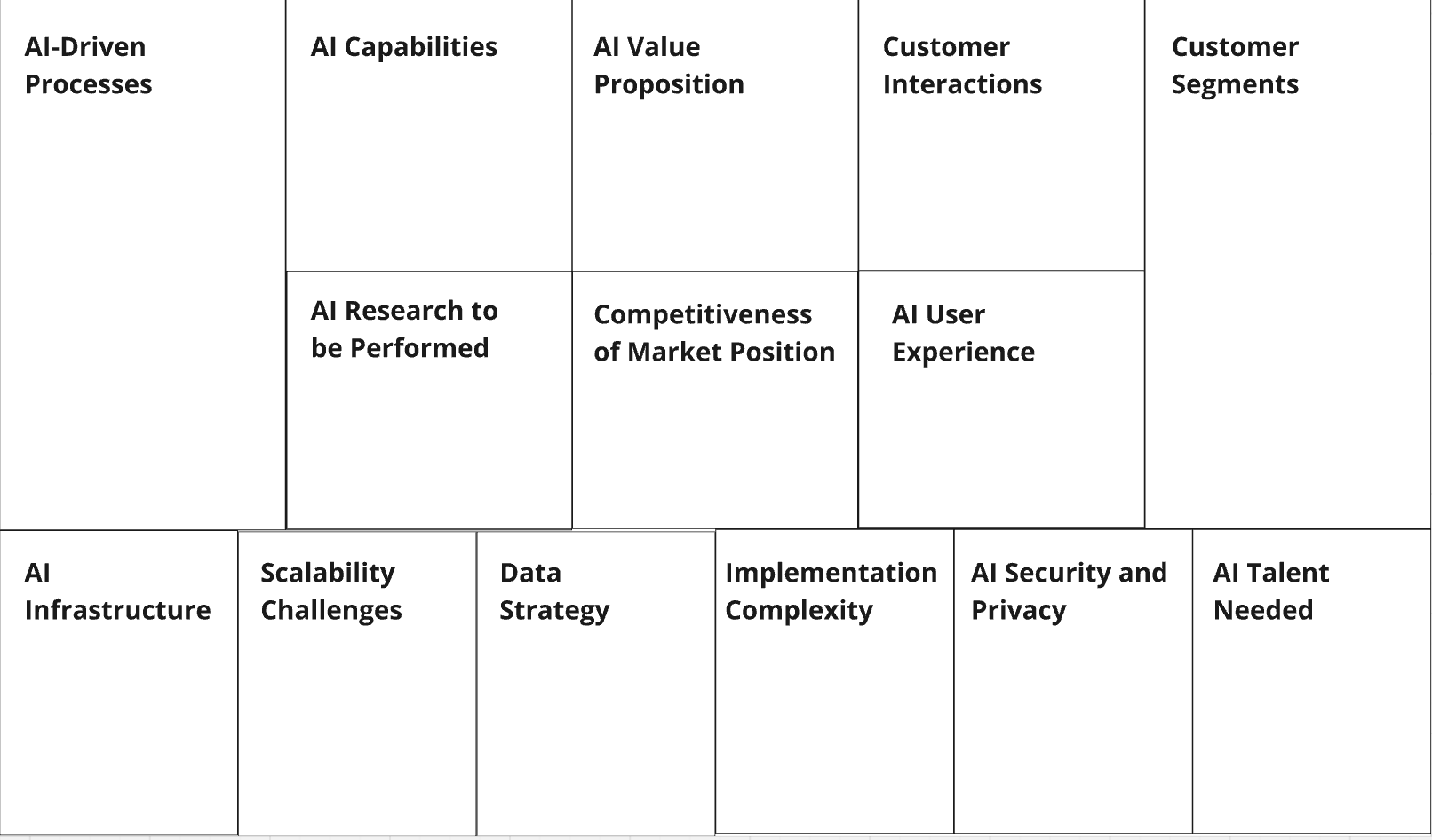
Artificial Intelligence (AI) is catalyzing a revolution in the startup ecosystem, akin to the transformative shift that the Business Model Canvas brought to business strategy. AI's potential to redefine industries, enhance efficiencies, and create new value propositions is unparalleled. Imagine AI-powered startups disrupting traditional sectors like healthcare, finance, and retail, much like how the Business Model Canvas revolutionized business planning and innovation.
AI is not merely a technological advancement; it is a paradigm shift. For instance, an AI-driven healthcare startup can diagnose diseases faster and more accurately than ever before, leading to early treatments and better patient outcomes. In the financial sector, AI can analyze vast amounts of data in real-time to predict market trends, providing invaluable insights for investors. In retail, AI can personalize shopping experiences by analyzing customer preferences and behaviors, driving higher customer satisfaction and loyalty.
Just as the Business Model Canvas provided a structured framework to innovate and strategize business models, the AI Startup Canvas aims to systematically guide AI-driven ventures towards success. By leveraging the AI Startup Canvas, entrepreneurs can ensure they are fully harnessing the transformative power of AI to innovate, optimize operations, and create unparalleled value for their customers.
The AI Startup Canvas is crafted to address the unique needs of AI startups, providing a clear, structured approach to developing AI-based business models. It helps entrepreneurs to visualize, analyze, and iterate on their AI strategies effectively. Traditional business models often fall short when it comes to the specific requirements and complexities of AI technologies. The AI Startup Canvas fills this gap by focusing on the unique elements essential for AI-driven ventures.
For example, the canvas includes specific components that address AI capabilities, data strategies, and AI-driven processes, which are crucial for the success of an AI startup. It ensures that startups consider all critical elements, from sourcing and managing data to deploying AI technologies and creating value for customers. This comprehensive approach helps in identifying potential challenges early and developing strategies to overcome them, thereby increasing the chances of success.
By laying out all critical elements of an AI business model, the AI Startup Canvas ensures that nothing vital is overlooked. It allows startups to systematically plan their AI strategies, align their resources effectively, and iterate on their models based on feedback and performance. This structured approach not only simplifies the complex process of developing AI-driven business models but also unlocks new opportunities for growth and innovation.
This article is aimed at entrepreneurs, startup founders, business strategists, and innovators who are looking to leverage AI to build successful businesses. Whether you are just starting or looking to scale your AI initiatives, the AI Startup Canvas provides the necessary framework to guide your journey. Startups at different stages of their lifecycle can benefit from this canvas, as it offers a flexible yet comprehensive approach to developing and refining AI strategies.
For early-stage startups, the canvas helps in laying a strong foundation by ensuring all critical elements are considered from the outset. It guides entrepreneurs through the process of identifying their AI value proposition, defining their target customer segments, and developing robust data strategies. For more established startups, the canvas serves as a tool for continuous improvement, helping them to refine their AI models, scale their operations, and stay ahead of the competition.
Business strategists and innovators can use the AI Startup Canvas to align AI initiatives with broader business goals, ensuring strategic coherence and maximizing the impact of AI technologies. By providing a clear framework, the canvas facilitates better communication and collaboration within teams, enabling them to work more effectively towards their shared objectives.
The AI Startup Canvas is inspired by the Business Model Canvas, yet it is tailored to the specific demands of AI technologies and applications. While the traditional canvas focuses on broad business aspects, the AI Startup Canvas delves into AI capabilities, data strategies, and AI-driven processes. This focus allows startups to address the complexities and opportunities that AI brings to the table.
For instance, the Business Model Canvas includes elements like value propositions, customer segments, and revenue streams, which are also relevant in the AI Startup Canvas. However, the AI Startup Canvas expands these elements to include AI-specific considerations, such as the unique value propositions offered by AI technologies, the specific data needs and strategies required for AI, and the specialized processes that leverage AI capabilities.
By integrating these AI-specific elements, the AI Startup Canvas provides a more detailed and nuanced approach to business modeling for AI startups. It ensures that all critical aspects of AI implementation are considered, from developing advanced algorithms to managing large datasets and deploying AI-driven solutions. This tailored approach helps startups to navigate the unique challenges of AI technologies and capitalize on the immense opportunities they offer.
For startups, AI is a game-changer. It enables the creation of unique value propositions that go beyond adding features to redefining entire business models. AI allows startups to compete with established companies by offering innovative solutions, personalized experiences, and optimized operations. It helps startups build integrated strategies where AI plays a primary role, defining the inherent structure of their value proposition.
For example, an AI-driven startup might develop a platform that uses machine learning to provide personalized health recommendations, creating a deeply personalized user experience that cannot be matched by traditional methods. Another startup could leverage AI to optimize supply chain logistics, drastically reducing costs and improving delivery times. These innovations are not just incremental improvements; they fundamentally change how businesses operate and deliver value to customers.
By harnessing AI effectively, startups can differentiate themselves in the market, create new opportunities, and drive significant growth. AI provides the tools to innovate rapidly, adapt to market changes, and meet evolving customer needs in a way that traditional methods cannot.
The future of AI in startups is bright. Continuous advancements in AI technology present startups with opportunities to innovate and disrupt traditional markets. With AI becoming more accessible, startups can leverage it to create unique, integrated strategies that set them apart.
Startups will increasingly use AI to develop groundbreaking products and services that address complex challenges. For instance, AI can enable startups to build platforms that offer real-time insights and predictive analytics, helping businesses make informed decisions faster. The AI Startup Canvas will be an essential tool in this landscape, guiding startups to stay ahead of the curve and maximize AI’s potential.
By using the AI Startup Canvas, startups can ensure that all critical aspects of their AI strategy are addressed, from data management to user experience. This comprehensive approach allows startups to build robust, scalable business models that can adapt to the rapidly changing technological environment.
We invite you to explore the AI Startup Canvas and apply it to your ventures. This tool is designed to help you build a robust, scalable business model where AI plays a central role. Whether you're just starting or looking to refine your AI strategy, the AI Startup Canvas provides the structure and insights needed for success.
Leverage the AI Startup Canvas to map out your AI strategies, identify potential challenges, and develop innovative solutions that can transform your startup. By doing so, you enhance your chances of success and contribute to the broader movement of AI-driven innovation.
Join us in this exciting journey and be part of the future of AI in startups. Together, we can push the boundaries of what is possible and create meaningful impact with AI at the core of our ventures. The AI revolution is here, and the AI Startup Canvas is your guide to navigating it with confidence and success.
The AI Startup Canvas is a strategic tool designed specifically for AI-driven ventures, helping entrepreneurs systematically map out, analyze, and iterate on their AI-based business models. Just as the Business Model Canvas revolutionized traditional business planning by providing a clear and structured approach, the AI Startup Canvas focuses on the unique demands and opportunities presented by AI technologies. It is a comprehensive framework that ensures all critical elements of an AI business model are considered, enabling startups to harness the full potential of AI.
The AI Startup Canvas is divided into several interconnected components, each addressing a crucial aspect of an AI startup. This structured approach allows entrepreneurs to visualize the entire business model at a glance, facilitating better decision-making and strategic planning. The canvas includes sections for AI value proposition, AI capabilities, data strategy, customer interactions, AI-driven processes, customer segments, competitiveness of market position, implementation complexity, and AI infrastructure.
AI Value Proposition: Defines the unique benefits and AI-driven solutions that set the startup apart in the market.
AI Capabilities: Identifies the core AI technologies and expertise the startup will develop or leverage.
Data Strategy: Details the types, sources, management, and utilization of data essential for powering AI capabilities.
Customer Interactions: Describes how AI will be used to interact with customers and collect feedback.
AI-Driven Processes: Outlines which business operations and processes will be enhanced or transformed by AI.
Customer Segments: Identifies and categorizes the different groups of customers or users who will benefit from the AI solutions provided by the startup.
Competitiveness of Market Position: Analyzes the startup's strategic position in the market facilitated by AI and identifies potential competitive advantages.
Implementation Complexity: Represents the challenges and costs associated with implementing and scaling AI within the startup.
AI Infrastructure: Outlines the necessary hardware, software, and technical frameworks required to develop, deploy, and scale AI solutions.
AI Research to be Performed: Specifies the AI research required to maintain a competitive edge over the competition.
AI Talent Needed: Focuses on cultivating a workforce skilled in AI and fostering an organizational culture that embraces continuous learning and innovation in AI.
Scalability Challenges: Addresses the strategies and approaches to scale AI solutions efficiently across different business units or market segments.
AI Security and Privacy: Focuses on safeguarding AI systems against cyber threats and ensuring the privacy of data used in AI processes.
AI User Experience: Ensures that AI solutions are designed with user-centric principles, offering intuitive and engaging interactions.
In real-world scenarios, the AI Startup Canvas can be a powerful tool for guiding AI initiatives from conception to execution. For instance, an AI healthcare startup might use the canvas to plan out how its diagnostic tools will leverage machine learning to improve accuracy and speed. The canvas helps the startup define its AI value proposition—providing rapid, reliable diagnoses—while also mapping out the necessary data strategy to gather and manage patient data effectively.
Another example is an AI-driven logistics company using the canvas to optimize its supply chain processes. The company can identify the AI capabilities needed for real-time tracking and predictive maintenance, plan out customer interactions through AI-driven interfaces, and ensure the infrastructure is robust enough to handle complex algorithms and data analysis.
By using the AI Startup Canvas, these startups can clearly see how each component of their business model interrelates, ensuring a cohesive and comprehensive strategy that leverages AI to its fullest potential.
The development of the AI Startup Canvas was inspired by the need for a tailored approach to business modeling in the AI domain. It evolved from extensive research and insights gathered from successful AI startups, industry experts, and strategic frameworks like the Business Model Canvas. The goal was to create a tool that addresses the specific challenges and opportunities in AI, providing startups with a practical and effective framework for planning and execution.
The canvas was refined through iterations, incorporating feedback from early adopters and continuously adapting to the rapidly evolving AI landscape. This iterative development process ensured that the canvas remained relevant, comprehensive, and user-friendly, making it an indispensable tool for AI entrepreneurs.
The AI Startup Canvas is meticulously crafted to meet the specific needs of AI-driven ventures, ensuring that startups can fully leverage the transformative potential of AI. Inspired by the principles in "Business Model Generation," the AI Startup Canvas serves as a strategic tool that guides startups through the complexities of developing and scaling AI technologies. Here are the six key objectives of the framework:
The AI Startup Canvas offers a structured approach to developing AI-driven business models. It simplifies the integration of AI into business strategy by breaking down complex processes into manageable components. This clear framework helps entrepreneurs visualize their entire business model, ensuring that every critical element is thoughtfully considered and strategically planned. Startups can quickly adapt to market changes and pivot their strategies effectively, staying ahead of competitors.
AI projects encompass various aspects, from data management to technical infrastructure and user experience. The AI Startup Canvas ensures that all these critical elements are covered comprehensively. By addressing each component of the AI business model, the canvas helps startups create well-rounded strategies that are robust and scalable, leaving no vital area overlooked. A well-rounded strategy ensures robust and scalable AI solutions that outperform competitors.
Effective communication and alignment within startup teams are crucial for success. The AI Startup Canvas enhances communication by providing a common language and visual tool that all team members can understand and use. This facilitates better collaboration, ensuring that everyone is aligned with the startup's goals and strategies. It also helps in communicating the business model to stakeholders, investors, and partners clearly and concisely. Cohesive teamwork accelerates innovation and reduces time-to-market for AI solutions.
One of the significant benefits of the AI Startup Canvas is its ability to help identify potential issues and opportunities at the planning stage. By mapping out all aspects of the AI business model, entrepreneurs can spot challenges early on and develop strategies to address them. This proactive approach minimizes risks and enhances the startup's ability to adapt and succeed in a dynamic market. Proactive risk management reduces disruptions and enhances the reliability of AI solutions.
The AI Startup Canvas enables startups to build a unique competitive advantage by clearly defining their AI value proposition and capabilities. It helps startups leverage AI to offer innovative solutions and personalized experiences that differentiate them from competitors. By focusing on unique AI-driven benefits, startups can establish a strong market presence and attract loyal customers. Unique AI offerings create barriers to entry for competitors, establishing a strong market presence.
An essential objective of the AI Startup Canvas is to assist startups in forming an unbeatable strategy. By providing a comprehensive overview of all critical elements, the canvas helps startups align their AI initiatives with broader business goals. This alignment ensures that AI technologies are integrated seamlessly into the overall strategy, creating a cohesive and powerful approach that drives success and sustains competitive advantage. An unbeatable strategy positions the startup as a market leader in AI innovation.
In summary, the AI Startup Canvas provides a comprehensive, structured, and strategic approach to developing AI-driven business models. It ensures that all critical elements are covered, enhances communication within teams, identifies and addresses challenges early, builds unique competitive advantages, and forms an unbeatable strategy. By leveraging this framework, AI startups can build robust, scalable, and innovative business models that stand the test of time.
The AI Value Proposition defines the unique benefits and AI-driven solutions that set the startup apart in the market.
The purpose of the AI Value Proposition is to articulate the specific value that the AI technology brings to customers. This helps in attracting and retaining customers by clearly demonstrating how the AI-driven product or service solves a problem or enhances their experience.
A well-defined AI Value Proposition helps in creating a unique competitive advantage by highlighting the innovative aspects of the AI solution. It ensures that the startup's offering stands out in the market, making it difficult for competitors to replicate the unique benefits provided by the AI technology.
Personalized User Experiences: Tailoring services or products to individual customer preferences using AI.
AI-Driven Predictive Maintenance: Using AI to predict and prevent equipment failures.
Real-Time Analytics for Decision-Making: Providing immediate insights and data-driven decisions through AI.
Automated Customer Service: Implementing AI chatbots and virtual assistants for customer support.
Enhanced Product Recommendations: Using AI to suggest products or services based on user behavior.
Fraud Detection and Prevention: Leveraging AI to identify and mitigate fraudulent activities.
Optimized Supply Chain Management: Using AI to streamline and enhance supply chain operations.
AI Capabilities identify the core AI technologies and expertise the startup will develop or leverage.
The purpose of AI Capabilities is to outline the technical strengths and expertise that the startup possesses or plans to acquire. This ensures that the startup has the necessary tools and knowledge to develop and deploy its AI solutions effectively.
By clearly defining AI Capabilities, a startup can focus on building and enhancing the technological foundation required to innovate and scale its AI solutions. This helps in staying ahead of competitors by continuously improving the technical aspects of the AI product or service.
Natural Language Processing (NLP) for Chatbots: Developing AI that understands and responds to human language.
Machine Learning for Data Analysis: Using algorithms to analyze and interpret complex data sets.
AI Algorithms for Predictive Modeling: Creating models that predict future outcomes based on historical data.
Computer Vision for Image Recognition: Implementing AI that can interpret and process visual information.
Reinforcement Learning for Automated Decision Systems: Using AI to make autonomous decisions based on rewards and penalties.
Speech Recognition and Processing: Developing AI that can understand and generate human speech.
Robotic Process Automation (RPA): Using AI to automate repetitive tasks and processes.
Data Strategy details the types, sources, management, and utilization of data essential for powering AI capabilities.
The purpose of a Data Strategy is to ensure that the startup effectively collects, manages, and uses data to fuel its AI technologies. This involves identifying data sources, implementing data governance practices, and ensuring data quality and relevance.
A robust Data Strategy is critical for the success of any AI initiative. By ensuring high-quality data and effective data management, a startup can improve the accuracy and performance of its AI models. This helps in maintaining a competitive edge by delivering superior AI-driven solutions.
Collecting User Behavior Data: Gathering data on how users interact with the product or service.
Leveraging IoT Device Data: Using data from Internet of Things devices to enhance AI capabilities.
Using Public Datasets for Training: Incorporating publicly available datasets to train AI models.
Implementing Data Governance Practices: Establishing rules and procedures for managing data integrity and security.
Ensuring Data Quality and Relevance: Verifying that the data used is accurate, complete, and relevant to the AI applications.
Data Integration from Multiple Sources: Combining data from various sources to provide a comprehensive dataset.
Anonymizing Data for Privacy Compliance: Removing personal identifiers from data sets to protect user privacy and comply with regulations.
Customer Interactions describe how AI will be used to interact with customers and collect feedback.
The purpose of Customer Interactions is to leverage AI technologies to enhance customer engagement and gather valuable insights. This involves using AI to provide personalized support, analyze customer sentiments, and adapt interactions based on feedback.
Effective AI-driven customer interactions can significantly improve customer satisfaction and loyalty. By providing seamless, personalized experiences and quickly addressing customer needs, startups can differentiate themselves from competitors and build a strong, loyal customer base.
AI Chatbots for Customer Support: Using AI-powered chatbots to handle customer inquiries and provide 24/7 support.
Sentiment Analysis on Customer Feedback: Analyzing customer feedback using AI to understand their sentiments and preferences.
Personalized Email Marketing: Leveraging AI to create tailored email campaigns based on customer behavior and preferences.
AI-Driven User Interface Adaptations: Adapting the user interface in real-time based on user interactions and preferences.
Automated Feedback Collection: Using AI tools to gather and analyze customer feedback automatically.
Voice Assistants for Customer Interaction: Implementing AI-driven voice assistants to interact with customers via voice commands.
Predictive Customer Service: Using AI to anticipate customer needs and proactively offer support or solutions.
AI-Driven Processes outline which business operations and processes will be enhanced or transformed by AI.
The purpose of AI-Driven Processes is to identify and implement AI technologies that can optimize and automate business operations, leading to increased efficiency, reduced costs, and improved outcomes.
By transforming business operations with AI, startups can achieve higher efficiency and scalability. This enables them to offer superior products or services at lower costs, gaining a competitive advantage in the market.
Automating Supply Chain Management: Using AI to optimize logistics, inventory management, and supply chain operations.
AI in HR for Talent Acquisition: Implementing AI to streamline recruitment processes and identify the best candidates.
AI-Driven Content Creation: Using AI to generate high-quality content for marketing, social media, and other channels.
Optimizing Logistics with AI: Leveraging AI to plan and execute efficient logistics and distribution strategies.
Predictive Analytics for Financial Planning: Using AI to forecast financial performance and inform strategic decisions.
AI-Powered Quality Control: Implementing AI for real-time quality control and defect detection in manufacturing processes.
Robotic Process Automation (RPA): Automating repetitive administrative tasks using AI-driven RPA solutions.
Customer Segments identify and categorize the different groups of customers or users who will benefit from the AI solutions provided by the startup.
The purpose of Customer Segments is to tailor AI features, functionalities, and value propositions to meet the distinct needs and preferences of each customer group. This helps in delivering targeted solutions and maximizing customer satisfaction.
By understanding and segmenting customers effectively, startups can create highly personalized AI solutions that resonate with each segment. This targeted approach enhances customer engagement and loyalty, making it difficult for competitors to replicate the same level of personalization and service.
Early Adopters: Customers who are eager to try new AI technologies and provide valuable feedback.
Tech-Savvy Users: Customers who are comfortable with technology and look for advanced features and capabilities.
Cost-Conscious Consumers: Customers who prioritize cost savings and efficiency over cutting-edge features.
Large Enterprises: Organizations that require scalable AI solutions to enhance their operations.
Small and Medium-Sized Businesses (SMBs): Smaller companies looking for affordable and easy-to-implement AI solutions.
Individual Consumers: End-users who use AI-driven products for personal use, such as smart home devices or personal assistants.
Non-Profit Organizations: Organizations that leverage AI to achieve their missions more effectively, such as using AI for data analysis in social causes.
Competitiveness of Market Position analyzes the startup's strategic position in the market facilitated by AI and identifies potential competitive advantages.
The purpose of this element is to evaluate and strengthen the startup's market position by leveraging AI technologies. It involves understanding the competitive landscape, identifying unique strengths, and developing strategies to differentiate from competitors.
By clearly defining and enhancing the startup's competitive position, this element helps in building a strong market presence. AI-driven innovations can create barriers for competitors, establish first-mover advantages, and foster brand recognition for AI excellence.
Niche Market Targeting with AI: Focusing on specialized markets where AI can provide unique solutions.
First-Mover Advantage in AI Application: Being the first to introduce a particular AI technology in the market.
Superior AI-Driven Product Performance: Offering products that outperform competitors' through advanced AI capabilities.
Strategic AI Partnerships: Forming alliances with other tech companies to strengthen AI offerings.
Brand Reputation for AI Innovation: Building a brand known for cutting-edge AI solutions.
AI-Enhanced Customer Loyalty Programs: Using AI to create personalized loyalty programs that boost customer retention.
Exclusive AI Features: Providing unique AI-driven features that are not available in competing products.
Implementation Complexity represents the challenges and costs associated with implementing and scaling AI within the startup.
The purpose of this element is to identify and plan for the various hurdles that can arise during the development and deployment of AI solutions. This includes financial costs, technical challenges, and regulatory considerations.
By anticipating and addressing implementation complexities, startups can ensure smoother AI integration and scalability. This proactive approach minimizes disruptions, manages costs effectively, and enhances the reliability and performance of AI solutions.
High Computational Costs for Training AI Models: Managing expenses related to the computational power needed for AI.
Investment in Acquiring High-Quality, Relevant Datasets: Allocating funds for purchasing or gathering necessary data.
Costs Associated with Hiring and Retaining AI Talent: Budgeting for the salaries and benefits of skilled AI professionals.
Expenses Related to AI Research and Development: Funding the R&D activities to innovate and improve AI technologies.
Regulatory Compliance Costs and Risk Mitigation Expenses: Ensuring AI solutions meet legal standards and minimize risks.
Infrastructure Upgrades for AI Deployment: Investing in hardware and software infrastructure required for AI.
Integration with Existing Systems: Addressing the complexity and costs of integrating AI with current business systems.
AI Infrastructure outlines the necessary hardware, software, and technical frameworks required to develop, deploy, and scale AI solutions.
The purpose of AI Infrastructure is to provide the foundational technical resources that support the development and operation of AI applications. This includes everything from cloud services to data storage solutions and AI development tools.
A robust AI infrastructure ensures that the startup has the technical capability to develop and scale its AI solutions efficiently. It enhances performance, reliability, and scalability, enabling the startup to maintain a competitive edge through superior technological capabilities.
Investment in Cloud Computing Resources: Utilizing cloud platforms for scalable computing power.
Adopting Scalable AI Architectures: Designing AI systems that can grow with the startup's needs.
Ensuring Robust Data Storage Solutions: Implementing secure and efficient data storage systems.
Integrating AI Development Tools: Using specialized software for AI development and testing.
Establishing Reliable Monitoring and Maintenance Systems: Setting up systems to monitor AI performance and maintain uptime.
Utilizing GPU and TPU Hardware for AI Training: Investing in high-performance hardware for efficient AI model training.
Implementing CI/CD Pipelines for AI Deployment: Using continuous integration and continuous deployment frameworks to streamline AI model updates and releases.
AI Research to be Performed specifies the AI research required to maintain a competitive edge over the competition.
The purpose of this element is to ensure that the startup continuously innovates and stays ahead of technological advancements. Ongoing research helps in improving AI models, discovering new applications, and maintaining a leadership position in the market.
By committing to continuous AI research, a startup can pioneer new technologies and methodologies, creating unique solutions that competitors cannot easily replicate. This proactive approach to innovation secures long-term competitive advantages and positions the startup as a leader in AI innovation.
Exploratory Research in New AI Algorithms: Investigating and developing novel AI algorithms.
Improving Existing AI Models: Enhancing the accuracy and efficiency of current AI models.
Research on AI Ethics and Fairness: Ensuring AI solutions are ethical and unbiased.
Application-Specific AI Research: Developing AI for specific applications like healthcare, finance, or logistics.
AI for Edge Computing: Researching AI solutions that run on edge devices.
Human-AI Interaction Studies: Exploring how humans interact with AI to improve usability.
Scalability and Efficiency Research: Finding ways to make AI models more scalable and efficient.
AI Talent Needed focuses on cultivating a workforce skilled in AI and fostering an organizational culture that embraces continuous learning and innovation in AI.
The purpose of this element is to build and maintain a team of AI experts who can drive the development and deployment of AI solutions. It also involves creating an environment that encourages ongoing education and adaptation to new AI technologies.
A talented AI team is crucial for developing cutting-edge solutions and staying competitive. By attracting and retaining top AI talent, a startup ensures that it has the expertise required to innovate and respond to technological changes swiftly.
Machine Learning Engineers: Specialists in developing and deploying machine learning models.
Data Scientists: Experts in analyzing data and creating predictive models.
AI Researchers: Professionals focused on advancing AI theory and applications.
AI Ethics Specialists: Ensuring that AI systems are ethical and compliant with regulations.
AI Product Managers: Managing AI projects and aligning them with business goals.
AI Software Developers: Building and maintaining AI software solutions.
AI Trainers and Educators: Providing ongoing training to keep the team updated with the latest AI advancements.
Scalability Challenges address the strategies and approaches to scale AI solutions efficiently across different business units or market segments.
The purpose of this element is to ensure that AI solutions can grow and adapt to increasing demands without compromising performance or reliability. It involves planning for and addressing the technical, operational, and financial challenges associated with scaling AI technologies.
By effectively managing scalability challenges, a startup can ensure its AI solutions remain robust and efficient as the business grows. This ability to scale seamlessly provides a significant competitive edge, allowing the startup to meet market demands and expand its operations efficiently.
Developing Modular AI Components: Creating AI solutions that can be easily scaled by adding new modules.
Leveraging Cloud AI Services: Using cloud-based AI platforms to scale computational resources on demand.
Adopting Microservices Architecture: Designing AI systems with a microservices approach for better scalability.
Ensuring Cross-Departmental AI Integration: Integrating AI solutions across various departments to ensure cohesive scalability.
Planning for AI Load Balancing and Auto-Scaling: Implementing systems that automatically balance loads and scale resources as needed.
Optimizing Data Storage and Processing: Ensuring data infrastructure can handle increased data volumes efficiently.
Budgeting for Scalability Costs: Allocating financial resources to support the scaling of AI technologies.
AI Security and Privacy focuses on safeguarding AI systems against cyber threats and ensuring the privacy of data used in AI processes.
The purpose of this element is to protect sensitive data and AI models from unauthorized access, breaches, and other security threats. It also involves implementing practices to ensure that data privacy regulations are met, maintaining user trust and compliance with legal standards.
By prioritizing security and privacy, startups can build trust with customers and stakeholders, creating a competitive advantage. Secure and privacy-compliant AI solutions are more likely to be adopted by users and integrated into larger ecosystems, providing a stable foundation for growth.
Implementing AI-Specific Security Protocols: Establishing protocols tailored to protect AI systems.
Conducting Regular AI System Audits: Performing routine checks to identify and mitigate vulnerabilities.
Anonymizing Data for Privacy Compliance: Removing personal identifiers from data to protect user privacy.
Adopting Data Encryption Techniques: Encrypting data to prevent unauthorized access.
Ensuring Compliance with Data Protection Regulations: Meeting GDPR, CCPA, and other regulatory requirements.
Building Secure AI Development Environments: Creating secure environments for developing and testing AI models.
Monitoring for Security Breaches and Anomalies: Implementing continuous monitoring systems to detect and respond to threats.
AI User Experience ensures that AI solutions are designed with user-centric principles, offering intuitive and engaging interactions.
The purpose of this element is to create AI-driven products and services that are easy to use and provide a positive experience for users. This involves designing interfaces, interactions, and feedback mechanisms that are aligned with user needs and preferences.
A superior user experience can significantly differentiate an AI solution in the market. By focusing on usability and engagement, startups can enhance customer satisfaction, foster loyalty, and increase adoption rates, giving them a competitive edge.
Designing User-Friendly AI Interfaces: Creating interfaces that are intuitive and easy to navigate.
Conducting User Testing for AI Features: Testing AI functionalities with real users to gather feedback and improve.
Personalizing AI Interactions: Customizing AI responses and behaviors based on user preferences.
Ensuring Accessibility in AI Solutions: Making sure AI applications are accessible to users with disabilities.
Collecting User Feedback on AI Usability: Implementing mechanisms for users to provide feedback on their experience.
Iterative Design and Improvement: Continuously improving AI solutions based on user feedback and testing.
Implementing AI-Driven User Assistance: Using AI to assist users in navigating and using the product effectively.
Implementing the AI Startup Canvas involves several phases, from initial preparation to detailed planning and ongoing iteration. This structured approach ensures that all critical elements are considered, helping startups build robust and scalable AI-driven business models.
Gather Relevant Data
Start by collecting all necessary data related to your AI project. This includes market research, customer insights, competitor analysis, and technical specifications.
Tip: Ensure the data is up-to-date and relevant to your business context. Use a mix of qualitative and quantitative data to get a comprehensive view.
Involve Key Stakeholders
Engage team members, investors, advisors, and potential customers in the planning process. Their insights and feedback are crucial for a well-rounded strategy.
Tip: Schedule workshops or brainstorming sessions with stakeholders to gather diverse perspectives and ensure alignment on goals and objectives.
Define AI Value Proposition
Articulate the unique value your AI startup will offer. Focus on the specific problems your AI solution will solve and the benefits it provides to customers.
Tip: Use the "jobs-to-be-done" framework to understand customer needs and align your value proposition accordingly.
Identify AI Capabilities
Determine and list the core AI technologies and expertise required for your solution. This includes machine learning, natural language processing, computer vision, etc.
Tip: Assess your current technical capabilities and identify any gaps. Plan for training or hiring to fill these gaps.
Develop Data Strategy
Plan for data collection, management, and utilization. Identify data sources, ensure data quality, and establish data governance practices.
Tip: Focus on both the quantity and quality of data. Consider partnerships or third-party data providers if necessary.
Outline Customer Interactions
Plan AI-driven customer engagement and feedback collection. Decide how AI will enhance customer support, personalization, and overall experience.
Tip: Use AI to analyze customer feedback and continuously improve your interactions. Implement chatbots or virtual assistants for real-time support.
Map AI-Driven Processes
Identify and plan AI enhancements for business operations. This includes automating repetitive tasks, optimizing supply chains, and improving decision-making processes.
Tip: Prioritize processes that offer the highest return on investment when automated or optimized with AI.
Segment Customers
Identify and categorize the different customer segments for your AI solutions. Tailor your offerings to meet the needs of each segment.
Tip: Use data analytics to understand customer behavior and preferences. Create detailed personas for each segment.
Analyze Market Position
Assess and improve your market position using AI. Analyze competitors, identify market gaps, and leverage AI to offer superior products or services.
Tip: Continuously monitor market trends and competitor activities. Adjust your strategy to maintain a competitive edge.
Plan for Implementation Complexity
Identify and plan for the challenges and costs of implementing AI. This includes technical hurdles, financial costs, and regulatory compliance.
Tip: Develop a detailed project plan with timelines, milestones, and budgets. Consider phased implementation to manage complexity.
Build AI Infrastructure
Establish the necessary hardware, software, and frameworks needed to develop and scale AI solutions. This includes cloud computing, data storage, and development tools.
Tip: Choose scalable and flexible infrastructure solutions that can grow with your business needs.
Conduct AI Research
Plan and execute research to maintain a competitive edge. Stay updated with the latest AI advancements and incorporate them into your strategy.
Tip: Allocate resources for ongoing R&D. Encourage collaboration with academic institutions and industry experts.
Recruit AI Talent
Hire and retain skilled AI professionals. Build a team with the necessary expertise to drive your AI initiatives.
Tip: Offer competitive salaries, professional development opportunities, and a dynamic work environment to attract top talent.
Scale AI Solutions
Efficiently scale AI solutions across different units or market segments. Ensure that your AI models and infrastructure can handle increased demand.
Tip: Implement robust testing and monitoring to ensure scalability. Use cloud-based solutions to easily expand capacity.
Ensure AI Security and Privacy
Implement security and privacy measures for AI systems. Protect sensitive data and ensure compliance with regulations.
Tip: Use encryption, access controls, and regular security audits to safeguard data. Stay updated on regulatory changes.
Enhance AI User Experience
Design user-centric AI solutions. Focus on creating intuitive and engaging interactions for users.
Tip: Conduct user testing to gather feedback and make iterative improvements. Prioritize accessibility and personalization in your designs.
After implementing the AI Startup Canvas, continuously review and refine your strategy based on interactions with customers. Use customer feedback and data analytics to identify areas for improvement and iterate on your AI solutions. This ongoing process ensures that your startup remains agile, responsive to market needs, and positioned for long-term success.
By following these phases and tips, startups can effectively implement the AI Startup Canvas, building robust, scalable, and innovative AI-driven business models that stand out in the competitive market.
This startup analyzed focuses on providing comprehensive market intelligence through advanced AI technologies. It addresses the challenge businesses face in keeping up with rapidly changing market conditions and competitive landscapes. By leveraging AI-driven tools to scrape and analyze vast amounts of data from various sources such as competitor websites, industry reports, and social media, the startup offers real-time insights and trends. This enables companies to make data-driven decisions, identify new opportunities, and anticipate market shifts. The core problem it solves is the inefficiency and inaccuracy of traditional market research methods, offering instead a scalable, precise, and timely solution that helps businesses stay ahead in a competitive environment.
Immediate Insights: Our AI-driven platform provides instant analysis of market data. (Helps businesses make quick, informed decisions)
Data-Driven Decisions: Empower companies with actionable insights derived from real-time data scraping and analysis. (Provides reliable recommendations for strategic decisions)
Predictive Analytics: Forecast future market trends based on historical data patterns. (Allows proactive adjustments by predicting market trends and customer behavior)
Natural Language Processing (NLP): Analyze market reports and news articles for relevant trends. (Extracts insights from unstructured text data)
Machine Learning for Trend Analysis: Develop algorithms to identify emerging market trends and potential opportunities. (Detects patterns in large datasets)
Web Scraping: Implement automated data collection from competitor websites and industry sources. (Continuously gathers up-to-date market information)
Data Visualization: Create interactive dashboards to display market trends and insights. (Presents data in an easily understandable format for decision-makers)
Collect Competitor Data: Use web scraping tools to gather data on competitor pricing, product launches, and market strategies. (Provides insights into competitor activities)
Market Trend Data: Aggregate data from industry reports, financial news, and market research studies. (Identifies key trends and market shifts)
Customer Feedback Data: Collect data from online reviews, social media, and customer surveys. (Understands customer sentiment and preferences)
Data Quality and Relevance: Implement data validation and cleaning processes to ensure high-quality, relevant data. (Maintains accuracy and reliability of insights)
AI Chatbots for Data Collection: Use chatbots to engage with customers and gather feedback on market needs. (Enhances data collection through direct customer interaction)
Sentiment Analysis on Social Media: Monitor and analyze customer feedback on social media platforms. (Gauges customer sentiment and market perception)
Personalized Reports: Generate customized market intelligence reports based on specific client needs. (Delivers relevant insights tailored to individual clients)
Automated Trend Analysis: Use AI to continuously analyze market data and identify emerging trends. (Provides real-time insights into market opportunities)
Competitor Benchmarking: Implement AI algorithms to compare your company’s performance metrics with those of competitors. (Helps understand competitive positioning)
Market Potential Estimation: Use AI to estimate the size and potential of new markets based on historical and real-time data. (Supports strategic decision-making with accurate forecasts)
Tech-Savvy Businesses: Focus on companies that are eager to adopt new AI-driven market intelligence tools. (Targets businesses open to innovative solutions)
Market Researchers: Provide tools and insights specifically designed for market analysis professionals. (Supports thorough and accurate market research)
Large Enterprises: Offer scalable competitive intelligence solutions for large corporations. (Caters to big companies needing extensive market data and analysis)
Exclusive Data Insights: Offer proprietary data insights that competitors cannot easily replicate. (Creates a unique selling point with exclusive information)
Advanced Predictive Models: Develop machine learning models that provide more accurate market forecasts than competitors. (Enhances decision-making with superior predictions)
Custom Market Intelligence Solutions: Tailor solutions to specific client needs, providing unique value. (Differentiates your offerings with bespoke services)
High Computational Costs for Data Processing: Budget for the high costs associated with processing large volumes of data. (Ensures scalability while managing expenses)
Investment in Data Acquisition: Secure funds for acquiring premium datasets from industry sources. (Ensures access to high-quality, relevant data)
Integrating Multiple Data Sources: Develop solutions to seamlessly integrate data from various sources into a unified system. (Ensures comprehensive data coverage)
Scalable Cloud Computing Resources: Use cloud platforms like AWS or Google Cloud for data processing. (Ensures the ability to scale with growing data needs)
Secure Data Storage Solutions: Implement encrypted data storage solutions to protect sensitive information. (Ensures data integrity and security)
Advanced AI Development Tools: Utilize tools like TensorFlow or PyTorch for building and refining AI models. (Supports the development of advanced AI capabilities)
Enhancing NLP for Market Analysis: Improve natural language processing algorithms to better understand market reports and news. (Provides more precise insights from textual data)
Innovating Web Scraping Techniques: Develop more efficient and comprehensive methods for scraping data. (Ensures high-quality, real-time data collection)
Optimizing Predictive Models: Focus on increasing the accuracy and reliability of machine learning models for market forecasts. (Enhances the quality of predictive analytics)
Machine Learning Engineers: Develop and deploy advanced machine learning models. (Ensures expertise in building predictive algorithms)
Data Scientists: Analyze complex datasets and create actionable insights. (Provides deep insights through data analysis)
AI Researchers: Advance AI theories and applications relevant to market intelligence. (Keeps the company at the forefront of AI innovation)
Modular AI Components: Develop AI solutions that can be easily scaled by adding new modules. (Ensures flexibility and scalability of the platform)
Leveraging Cloud AI Services: Use cloud-based AI platforms to scale computational resources as needed. (Allows for easy expansion as data needs grow)
Optimizing Data Storage and Processing: Ensure the infrastructure can handle increased data volumes efficiently. (Maintains performance with growing data)
Encrypt All Data Transfers: Implement end-to-end encryption for all data transmissions. (Protects data integrity and confidentiality)
Data Anonymization Tools: Use tools to anonymize personal data. (Complies with privacy regulations and protects user identity)
AI Model Security Audits: Regularly audit AI models for security compliance. (Maintains model integrity and reliability)
Real-Time Threat Detection: Use AI to monitor and detect threats in real-time. (Prevents breaches and ensures quick response)
Interactive Dashboards: Create user-friendly, interactive dashboards for data visualization. (Enhances user engagement and data interpretation)
Customizable Reports: Allow users to customize their reports based on specific needs. (Increases relevance and usability)
Natural Language Queries: Enable users to interact with the platform using natural language. (Improves accessibility and user satisfaction)
User Feedback Integration: Continuously collect and integrate user feedback to improve the platform. (Ensures the platform evolves with user needs)
Accessible Design: Ensure the platform is accessible to users with disabilities. (Broadens the user base and enhances usability)
Personalized User Experience: Tailor the platform's interface and functionalities to individual user preferences. (Increases user satisfaction and engagement)
These meta patterns provide a high-level framework for understanding the strategic applications of AI in startups. By identifying and leveraging these patterns, startups can develop robust, innovative, and scalable AI solutions that drive competitive advantage and sustainable growth.
Automated Personalization
Definition: Leveraging AI to tailor products, services, and experiences to individual users.
Importance: Enhances customer satisfaction and loyalty by providing highly relevant and personalized interactions, increasing engagement and retention.
Predictive Analytics
Definition: Using AI to analyze historical data and predict future outcomes.
Importance: Helps businesses anticipate trends, make informed decisions, and stay ahead of competitors by leveraging data-driven insights.
Intelligent Automation
Definition: Automating complex processes and tasks using AI.
Importance: Increases operational efficiency, reduces costs, and minimizes human error, allowing companies to scale operations more effectively.
Natural Language Understanding
Definition: Applying AI to understand and process human language.
Importance: Facilitates better communication between humans and machines, improving customer support, and enabling advanced text analysis and conversational interfaces.
Real-Time Data Processing
Definition: Using AI to process and analyze data as it is generated.
Importance: Provides immediate insights and enables real-time decision-making, crucial for dynamic environments like financial markets and emergency response.
AI-Enhanced Security
Definition: Implementing AI to detect and respond to security threats.
Importance: Enhances cybersecurity measures, protects sensitive data, and prevents breaches by identifying threats proactively.
Machine Learning Optimization
Definition: Continuously improving AI models and algorithms for better performance.
Importance: Ensures that AI systems remain effective and efficient, adapting to new data and evolving requirements.
Augmented Human Intelligence
Definition: Combining AI with human expertise to enhance decision-making.
Importance: Leverages the strengths of both humans and machines, leading to better outcomes in complex and nuanced scenarios.
AI-Powered Insights
Definition: Generating deep insights from large datasets using AI.
Importance: Enables businesses to uncover hidden patterns, trends, and opportunities that would be impossible to detect manually.
Scalable AI Solutions
Definition: Designing AI systems that can scale seamlessly with growing data and user demands.
Importance: Ensures that AI applications remain robust and efficient as the business expands, supporting sustainable growth.
Data-Driven Decision Making
Definition: Basing strategic decisions on AI-analyzed data.
Importance: Reduces guesswork, increases accuracy, and aligns decisions with actual data, leading to more effective strategies.
Cross-Industry Applications
Definition: Applying AI solutions to diverse industries beyond tech.
Importance: Demonstrates the versatility of AI, opening new markets and driving innovation across various sectors such as healthcare, agriculture, and manufacturing.
Customer Experience Enhancement
Definition: Using AI to improve all aspects of the customer journey.
Importance: Builds stronger customer relationships, enhances satisfaction, and drives loyalty by providing superior service and support.
AI-Driven Innovation
Definition: Leveraging AI to create entirely new products, services, or business models.
Importance: Drives growth and differentiation in the market by continuously introducing groundbreaking innovations.
Adaptive Learning Systems
Definition: Creating AI systems that adapt and improve over time with new data.
Importance: Ensures long-term relevance and effectiveness of AI applications, making them more resilient and capable of handling changing environments.